
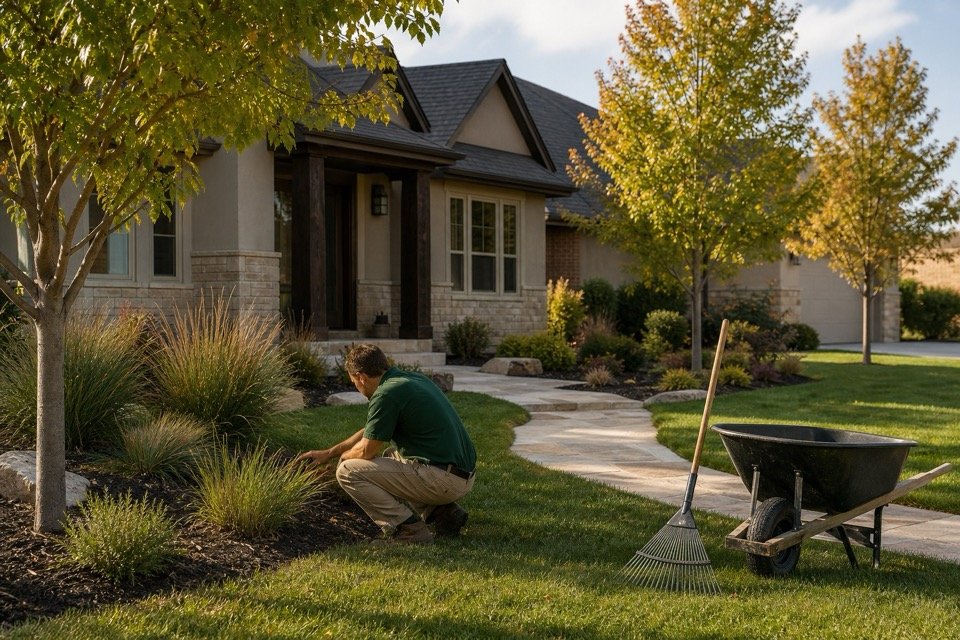
Central Kansas properties move through a demanding cycle: summer heat, drying wind, sudden storms, large temperature swings and winter freezes. By late summer, a lawn or landscape may still look green from the street while showing irrigation problems, compacted soil, stressed plants or drainage trouble up close. A thoughtful fall review gives you time to correct those issues before they become larger and more expensive.
The goal is not to complete every possible task in one weekend. The goal is to identify what the property needs, put the work in the right order and focus effort where it will protect the landscape most. Use this guide as a starting point, then adjust for your turf type, plant material, soil, irrigation system and the actual weather.
Begin with a slow walk around the property
Start with observation before cleanup hides the evidence. Walk the property after the irrigation has run or after a steady rain. Look for water collecting near foundations, soil washing across walks, low areas that remain wet, sprinkler overspray, leaning edging, loose pavers and downspouts that empty in the wrong place. Check lawn edges, shaded areas and narrow side yards separately because they often behave differently from the open front lawn.
Take photos and make one list organized by priority. Safety and water-management concerns come first. Plant health and lawn recovery come next. Cosmetic cleanup and optional upgrades follow after the property is functioning correctly. This order prevents fresh mulch, new sod or new planting from covering a drainage or irrigation problem that still needs work.
Help the lawn recover before winter
Fall lawn care should respond to what summer revealed. Thin areas may come from uneven watering, shade, heavy traffic, disease, insects, poor soil or the wrong grass for that location. Adding seed or fertilizer without identifying the cause can produce a brief improvement without solving the problem.
Keep mowing while the grass is actively growing, and avoid removing too much leaf blade at one time. Sharp mower blades make cleaner cuts and reduce unnecessary stress. If the ground is hard and water struggles to soak in, core aeration may help relieve compaction in an actively growing lawn. Seeding and fertilization timing depends on whether the property has cool-season or warm-season turf, so the treatment should match the grass rather than a generic calendar date.
Before making major repairs, compare the damaged areas with sprinkler coverage and soil moisture. Our guide to helping a lawn recover from summer heat explains how mowing height, deep watering and soil checks work together. Where grass repeatedly fails because of deep shade, pet traffic, narrow access or constant wear, it may be more practical to redesign the area with planting, hardscape or professionally installed artificial turf.
Audit the irrigation system while problems are still visible
Do not wait until spring to remember a dry zone or broken head. Run each irrigation station and watch the complete cycle. Look for heads that do not rise, spray blocked by plants, misting caused by pressure problems, water hitting pavement, uneven arcs, bubbling around valves and runoff before the cycle finishes. A small leak can waste water and create soft soil long before it becomes obvious on the bill.
Seasonal watering should follow plant needs and actual weather rather than staying on a summer schedule. As temperatures moderate and growth slows, many properties need less frequent irrigation. Continue checking soil instead of assuming that cooler air automatically means adequate root-zone moisture. Trees and shrubs entering winter dry may be more vulnerable, while constant saturation can be equally damaging.
Plan winter preparation before a hard freeze. The exact process depends on the system design and local conditions; shutting off the controller alone may not protect every component. Disconnect hoses, protect exposed fixtures and arrange proper irrigation service if the system requires professional winterization. Review our article on three sprinkler-system warning signs if you noticed dry arcs, runoff or unexplained water use this season.
Manage leaves without smothering the lawn
A light layer of dry leaves can sometimes be chopped finely with a mower and returned to the lawn, but thick or wet leaves should not remain matted over turf. They block light, hold moisture against the grass and make spring cleanup harder. Remove heavy accumulation from lawns, drainage inlets, window wells, walks and areas where wind packs leaves against fences or buildings.
Leaves can be valuable when handled intentionally. Clean, disease-free material may be composted or used appropriately in naturalized areas. Avoid piling leaves tightly around trunks, over low evergreen foliage or where they can wash into a storm drain. The best method depends on volume, tree species, available space and the way the property is maintained.
Reset planting beds without over-cleaning them
Fall is a good time to remove aggressive weeds, cut out visibly damaged growth and restore clean bed edges. It is not always necessary to cut every perennial to the ground. Some healthy stems and seed heads provide winter texture and habitat, while diseased or pest-damaged material is better removed. Choose the approach plant by plant instead of treating the entire bed the same way.
Check mulch depth before adding more. Mulch should help moderate soil temperature and moisture, not bury plant crowns or trap water against trunks and foundations. Pull existing mulch back to see how much remains, loosen compacted layers and keep material away from direct contact with tree bark. More mulch is not automatically better.
Fall can also be a useful planting season because cooler air reduces stress while soil may remain workable. New trees and shrubs still need correct placement, adequate root space and consistent watering until the soil freezes. Set the root flare at the proper level, avoid circling roots and consider the plant's mature width—not just its size in the container. For a longer-term approach, see our guide to building a lower-maintenance landscape.
Pay special attention to trees and young plants
Inspect trees for broken limbs, weak attachments, rubbing branches, trunk damage and changes in leaf color or density. Large or hazardous pruning belongs with qualified tree professionals. For routine property care, remove loose material from around the base, correct mulch piled against the trunk and protect young bark from repeated mower or string-trimmer damage.
Recently planted trees and shrubs deserve a moisture check through fall. Their roots occupy a limited area and may dry out even when an established lawn nearby appears fine. Water should reach the root zone rather than run across the surface. Stakes and ties should also be inspected so they do not rub, constrict or remain longer than necessary.
Correct drainage before freeze-and-thaw cycles
Water movement connects nearly every outdoor improvement. Poor drainage can damage turf, drown plants, move mulch, undermine walks and place unwanted moisture near a building. Fall is an ideal time to map these patterns because summer storms and irrigation have already shown where the water goes.
Clear leaves and debris from surface drains, swales and downspout outlets. Confirm that soil has not built up against siding and that hard surfaces direct water appropriately. Sunken pavers, eroded edges and low areas may indicate a base or grading issue rather than a simple cleanup need. Avoid making a quick fill that redirects water toward a neighboring property or structure; drainage improvements should be planned across the complete flow path.
Inspect patios, walks, decks and fences
Outdoor structures are easier to evaluate before snow, ice and dormant vegetation hide their edges. Walk every hard surface and note rocking pavers, open joints, settlement, trip hazards, loose railings and areas where water stands. Small movement may point to drainage or base preparation that should be addressed before a surface is refinished.
On decks and fences, look for loose fasteners, splitting boards, decay near the ground, leaning posts and failed coatings. Cleaning or sealing should only happen under suitable product and weather conditions; coating damp, dirty or unstable material can shorten the life of the finish. If a future patio, fence or outdoor-living project will connect with existing landscaping, plan the drainage, utilities, access and final grades together.
Check outdoor lighting and winter access
Shorter days make lighting problems easier to notice. Clean lenses, verify timers, aim fixtures away from windows and confirm that paths, entries and changes in elevation are visible without harsh glare. Mark or relocate fixtures that could be damaged by snow removal or seasonal maintenance.
Think through winter access at the same time. Trim growth that narrows a walkway, identify downspouts that create ice across a path and keep service areas reachable. Commercial properties and homeowners associations should also review parking-lot edges, entrances, signs, trash areas and the route contractors will use during winter work.
Use fall to plan next year's larger projects
A good fall inspection often produces ideas that should be designed carefully rather than rushed before winter. Patios, retaining walls, fences, irrigation changes, landscape redesigns and property-wide improvements may require measurements, utility locations, material selections, approvals and coordinated phases. Starting those conversations now creates more time to compare options and build a realistic scope.
Share the whole plan even if the work will happen over several seasons. A future patio may affect current drainage. A fence may change equipment access. New beds may require irrigation adjustments. Our guide to planning a larger property improvement with fewer surprises explains how to organize those connected decisions.
Common fall landscaping mistakes to avoid
- Following a fixed calendar without considering turf type, plant needs or current weather.
- Covering drainage or irrigation problems with new seed, sod, rock or mulch.
- Allowing wet leaves to remain matted over lawns, drains and walking surfaces.
- Piling mulch against tree trunks, plant crowns, siding or foundation details.
- Cutting every perennial down without considering plant health and winter value.
- Stopping irrigation abruptly while newly planted trees and shrubs still need moisture.
- Coating or sealing a surface before correcting moisture, movement or preparation problems.
- Starting excavation without confirming utilities, property lines and required approvals.
Your property-wide fall checklist
- Photograph problem areas after irrigation or rain.
- Check lawn density, mowing quality, soil compaction and sprinkler coverage.
- Test every irrigation zone and plan freeze protection for the actual system.
- Remove heavy leaf accumulation from lawns, drains, walks and window wells.
- Weed beds, evaluate plant health and confirm mulch depth.
- Check moisture around young trees, shrubs and recent plantings.
- Inspect drainage routes, downspouts, low spots and eroded edges.
- Review patios, walks, decks, fences, railings and outdoor lighting.
- Separate urgent repairs from projects that need design and budgeting.
- Schedule larger work early enough for site review, selections and coordination.
A better fall plan starts with the whole property
The most effective seasonal work connects lawn care, irrigation, planting, drainage and construction rather than treating each area as an isolated task. CPS Home & Garden helps homeowners, businesses, property managers and HOAs in Great Bend and across Central Kansas evaluate the complete property, prioritize practical improvements and plan larger work in the right sequence.
If your list includes drainage corrections, irrigation work, landscape renovation, seasonal cleanup, a new patio or fence, artificial turf, surface preparation or a larger property improvement, share the photos and goals with CPS. A clear review now can prevent rushed decisions later.