
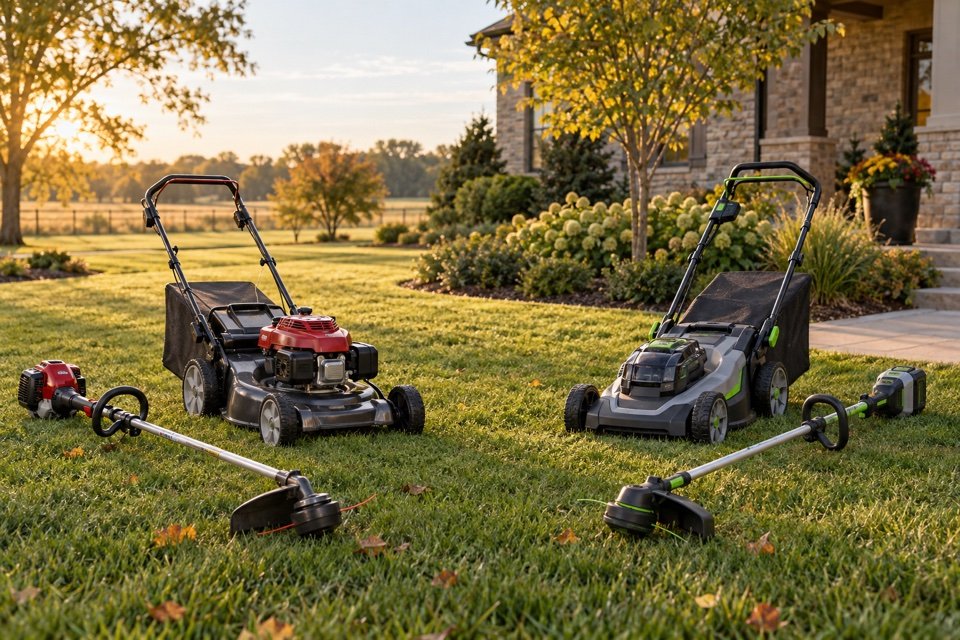
Battery-powered lawn equipment has moved far beyond the light-duty tools many people remember, while gas equipment continues to handle demanding work on large properties every day. That can make the buying decision feel more complicated than it should. A homeowner may hear that battery is always the future or that gas is the only serious option. Neither statement tells the complete story.
In Central Kansas, equipment has to work through thick spring growth, summer heat, wind, dry debris, heavy fall leaves and properties that vary from small city lots to several acres. The right answer may be gas, battery or a combination of both. Start with the job, then choose the power system that completes it comfortably, reliably and safely.
The short answer: choose for the work, not the label
Battery equipment is especially attractive for routine residential work, quick starts, lower day-to-day maintenance and noise-sensitive locations. Gas equipment remains practical for long periods of continuous operation, large areas, heavy material and jobs where a fast fuel refill matters more than quiet operation. A mixed setup can give a property owner or landscape crew the advantages of both.
Before comparing models, write down the property size, typical workload and worst workload. A mower that is comfortable for weekly cutting may struggle if travel or rain allows the grass to grow for three weeks. A leaf blower that clears a small patio may not move wet leaves from a long windbreak. Buying for realistic conditions prevents both overspending and frustration.
Where battery-powered equipment works well
A battery tool starts with a button or trigger. There is no fuel to mix, carburetor to clean, spark plug to change or engine oil to manage on common handheld tools. For homeowners who want to mow, trim or blow off a walk without preparing an engine, that convenience is meaningful. Battery equipment also produces no tailpipe exhaust where it is being used and is generally quieter than comparable fuel-powered equipment.
Those qualities make battery tools a strong fit for small and medium residential properties, early work near homes, courtyards, schools, offices and other noise-sensitive settings. They can also reduce fatigue because many handheld battery tools have less vibration and do not require repeated pull-starting. Exact weight and balance still vary, so the best test is to hold the complete tool with its intended battery installed.
The biggest advantage often appears when several tools share one battery platform. A homeowner might use compatible packs across a mower, trimmer, blower and hedge trimmer. That simplifies charging and reduces the number of batteries required—but it also makes the platform decision important. Once several tools and packs have been purchased, changing brands can be expensive.
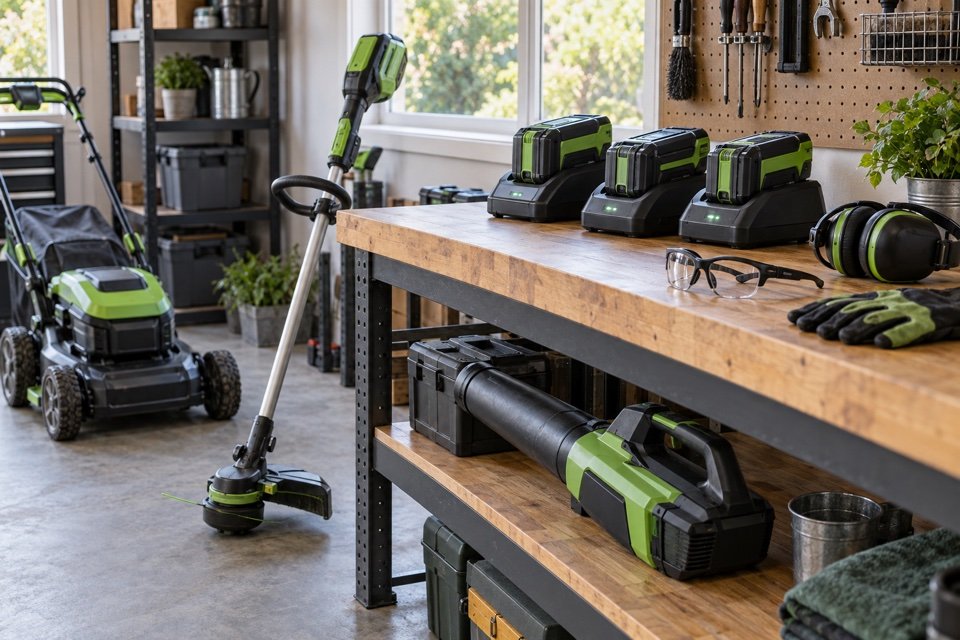
Battery limitations to plan around
Runtime is not one fixed number. Tall or wet grass, a dull mower blade, heavy leaf volume, thick brush, high power settings, temperature and battery age can all change how long a charge lasts. Marketing estimates may be useful for comparison, but they cannot reproduce every Kansas yard. Look for measured area or realistic task information, not only minutes under ideal conditions.
Charging time also matters. One battery may be enough for a small yard, while a larger property may need two or more packs, a faster charger or a planned pause. Commercial crews must think beyond one tool: can enough energy be carried and recharged to finish an entire route? Is charging available in the shop, vehicle or at the property? A tool that performs well for 40 minutes can still be the wrong system for several hours of uninterrupted work.
Batteries are expensive components and gradually lose capacity. Heat, physical damage, incorrect chargers and poor storage practices can shorten useful life or create a safety risk. Follow the manufacturer’s charging instructions, use compatible packs and chargers, and keep equipment in a dry location protected from extreme temperatures. Do not use a battery that is cracked, swollen, leaking, unusually hot or behaving abnormally.
Where gas-powered equipment still makes sense
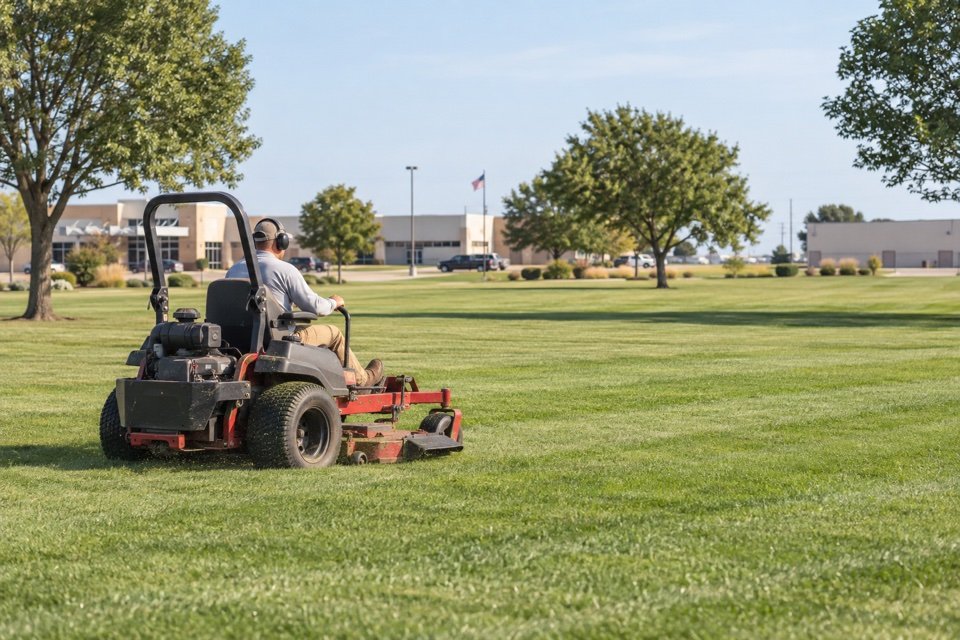
Gas equipment provides familiar, portable energy for demanding work. A crew can refuel in minutes and continue mowing a large commercial property. A saw can work far from electrical service. A heavy-duty mower can operate through a full route without managing a large inventory of charged packs. For acreage, neglected growth, storm cleanup and long continuous duty, those advantages are real.
Gas also benefits from an established repair network and decades of field experience. Owners who already maintain engines, store fuel correctly and use equipment regularly may find a well-supported gas machine economical over a long service life. The decision can be different for someone who uses a tool only a few times per year, because stale fuel and seasonal starting problems become more likely.
The tradeoffs that come with gas
Gas engines need fuel and regular maintenance. Depending on the machine, that may include oil, filters, spark plugs, belts and seasonal fuel-system care. Fuel must be transported and stored safely, and spills need immediate attention. Exhaust is produced at the point of use, and small-engine equipment can contribute air pollutants even when it is properly maintained.
Noise deserves serious consideration. The tool, attachment, workload and distance all affect exposure, but fuel-powered blowers, trimmers and saws can create substantial noise. NIOSH has reported higher noise and carbon-monoxide risks from fuel-powered landscaping tools than battery versions in field research. That does not make every battery tool quiet or eliminate the need for hearing protection. It means the power system can be one useful part of reducing exposure.
Compare the full cost—not just the tool on the shelf
A battery “bare tool” can look inexpensive until the required battery and charger are added. A gas tool can look less expensive until fuel, oil, maintenance and repair time are counted. Compare a complete working system over the number of years you realistically expect to keep it.
- Battery system: tool, enough batteries for the workload, compatible chargers, expected pack replacement and appropriate storage.
- Gas system: tool, fuel, oil and routine service parts, repair needs, storage cans and time spent on maintenance.
- Both systems: blades, trimmer line, chains, filters where applicable, protective equipment and eventual repair or replacement.
Also count downtime. A dead battery without a charged spare can stop a job. So can a gas engine that will not start. The more important the equipment is to your property or business, the more valuable dependable service, available parts and backup capacity become.
Choose tool by tool
Mowers
Battery walk-behind mowers can be an excellent match for many maintained residential lawns. Compare deck width, self-propel system, bagging performance and whether the battery capacity comfortably covers the yard under demanding conditions. For large acreage or an all-day commercial route, gas riding and zero-turn mowers often remain the simpler choice, although commercial battery machines continue to expand.
String trimmers and edgers
These are often the easiest tools to move to battery power. Routine trimming happens in shorter intervals, instant starting is convenient, and lower noise helps near homes. For thick brush, long fence lines or sustained professional use, compare cutting width, line size, balance, heat management and spare battery needs.
Leaf blowers
A battery blower can handle patios, walks and routine grass clippings well. Large volumes of wet leaves, long windbreaks and cleanup after storms demand more air movement and runtime. Compare both air volume and speed, then consider how long the tool maintains useful power—not simply the highest advertised setting.
Chainsaws and pole saws
Battery saws are convenient for pruning, small limbs and intermittent property work. Gas saws can remain preferable for large wood, repeated cuts and remote storm cleanup. Saw work is hazardous regardless of power source. Use the correct saw and protective equipment, understand kickback, and call a qualified tree professional for work near structures, utilities or elevated limbs.
For many properties, a mixed setup is the best answer
There is no rule that every tool must use the same power source. A homeowner may choose a battery trimmer and blower for weekly convenience while keeping a gas mower for a large lawn. A landscaping crew may use battery handheld equipment around homes and offices, then use gas mowers or saws for longer, heavier work. This approach reduces noise and engine maintenance where battery performs well without forcing it into a job that exceeds the available charging plan.
The mixed approach is especially practical during a gradual transition. Replace a worn-out tool when a suitable battery option fits, keep dependable gas equipment that still serves an important role, and evaluate real performance over a full season. That produces better information than replacing an entire fleet based on specifications alone.
Safety rules apply to both systems
- Read the manual and use every guard, handle and safety control supplied with the equipment.
- Wear eye protection, sturdy footwear and task-appropriate hearing protection; add leg, head or face protection when the job requires it.
- Inspect the work area for stones, wire, toys, branches and bystanders before starting.
- Stop the machine and isolate its power source before clearing a jam, changing a blade or making an adjustment. Follow the manual for removing a battery or disconnecting a spark plug.
- Keep fuel away from heat and ignition sources, refuel only after the engine has cooled, and never run combustion equipment in an enclosed space.
- Use only compatible batteries and chargers. Do not modify packs, charge damaged batteries or expose them to water and extreme heat.
A practical decision checklist
- Measure the lawn or work area instead of estimating it by sight.
- List routine tasks and the heaviest conditions the tool will face.
- Decide how much uninterrupted runtime is actually necessary.
- Check noise sensitivity near neighbors, offices, schools or occupied buildings.
- Confirm where fuel will be stored or batteries will be charged safely.
- Price the complete system, including backup energy and maintenance.
- Research local repair support, warranty terms and replacement-part availability.
- Choose the tool that comfortably completes the job with some capacity in reserve.
The property should determine the equipment
Battery power is a strong and increasingly capable choice for many routine landscaping tasks. Gas power continues to solve demanding runtime and heavy-work problems. The most confident decision comes from being honest about the size of the property, how often the work is performed and what conditions make it difficult.
If maintaining the lawn and landscape is taking more time than the property should require, the equipment may be only part of the problem. Poor access, tight mowing areas, drainage issues, overgrown beds and an inefficient layout can make any tool work harder. CPS Home & Garden helps homeowners, businesses, property managers and HOAs in Great Bend and Central Kansas plan practical lawn care, seasonal cleanup and property improvements around the way the site is actually used.
Frequently asked questions
Is battery lawn equipment powerful enough for Kansas grass?
Many current battery tools can handle routine residential mowing, trimming and blowing. Results depend on the tool, battery capacity, grass height, moisture, heat and property size. Heavy growth and long continuous work may require spare batteries or gas equipment.
Is battery lawn equipment cheaper than gas?
Battery tools can reduce fuel and routine engine maintenance, but batteries and chargers add upfront cost and packs eventually need replacement. Compare the complete system and several years of expected use rather than the bare-tool price.
Can I leave lawn-equipment batteries on the charger?
Follow the manufacturer instructions for charging and storage. Use only compatible chargers, keep packs dry and protected from extreme temperatures, and stop using a pack that is damaged, swollen, unusually hot or behaving abnormally.
Should a landscaping business use gas or battery equipment?
The right fleet depends on route length, property size, daily workload, charging access, noise-sensitive locations and weather. Many crews benefit from battery handheld tools for routine work while retaining gas equipment for long, high-demand jobs.