
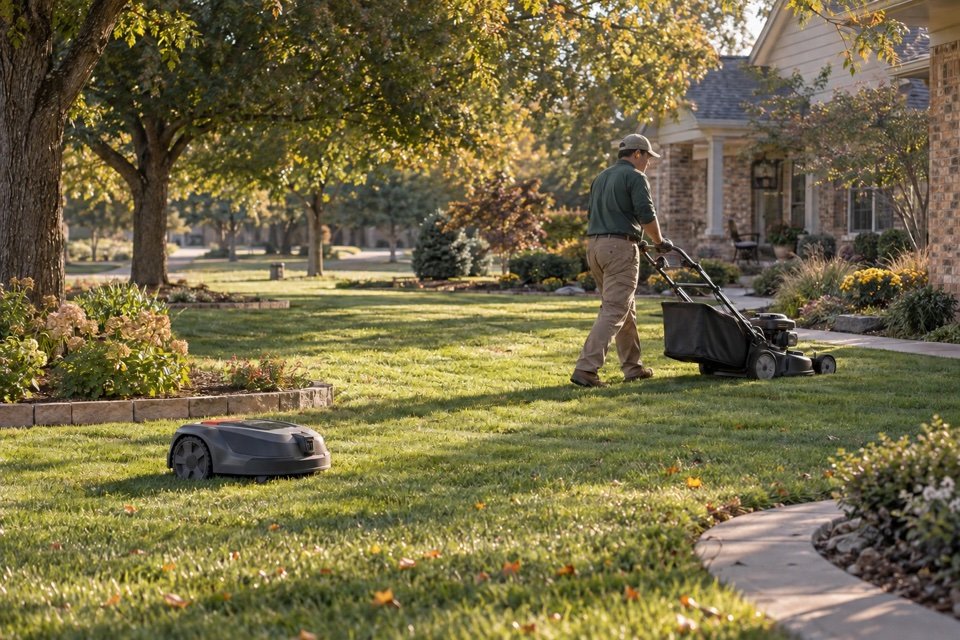
Robotic lawn mowers promise something every busy property owner understands: a consistently cut lawn without giving up part of every weekend. The mower leaves its charging station, cuts on a schedule and returns to recharge. Human-operated mowing looks less futuristic, but it brings judgment, flexibility and the ability to respond immediately when the property does not match the plan.
For a simple, open lawn, automation can be genuinely useful. For a Central Kansas property with mature trees, windblown branches, uneven ground, drainage trouble, pets, gates and multiple disconnected lawn areas, the answer becomes more complicated. The important question is not whether a person or a robot is “better.” It is which work can be automated reliably and which work still needs an experienced set of eyes and hands.
The biggest difference: repeated motion versus active judgment
A robotic mower is designed to repeat a defined task within a mapped or bounded area. Depending on the model, it may navigate using a buried perimeter wire, local reference station, satellite positioning, cameras, sensors or a combination of technologies. Once the system is correctly installed and the lawn stays within expected conditions, frequent light mowing can happen with limited daily effort.
A human operator does more than guide a machine. Before and during mowing, that person can notice a soft spot, new washout, broken sprinkler head, animal burrow, fallen limb, turf discoloration or toy hidden in the grass. The operator can change direction, raise the cutting height, skip saturated ground and stop to solve the problem. That ability to interpret changing conditions is still the clearest advantage of human-operated care.
Where robotic mowing can work very well
Robotic mowers are best suited to properties where the mowing area is clearly defined, reasonably smooth and accessible to the charging station. They excel at frequent cutting. Instead of removing a large amount once per week, the machine removes very small leaf tips on a regular schedule and returns the fine clippings to the lawn.
That routine can create a consistently maintained appearance without the pronounced growth-and-cut cycle of weekly mowing. Research summarized by the United States Golf Association found acceptable turf quality in nearly all studied robotic mowing situations, with results varying by grass species, weather and management. More frequent mowing also means the machine needs to remove less material per trip.
Robotic mowing may be attractive when:
- The lawn is one connected area with broad, predictable travel routes.
- The owner wants a consistently maintained height throughout the growing season.
- Noise-sensitive surroundings make a smaller battery machine appealing.
- The property has reliable power, a protected charging location and suitable connectivity if the model requires it.
- Someone can inspect the work area, maintain the machine and respond when it stops.
Robotic does not mean maintenance-free
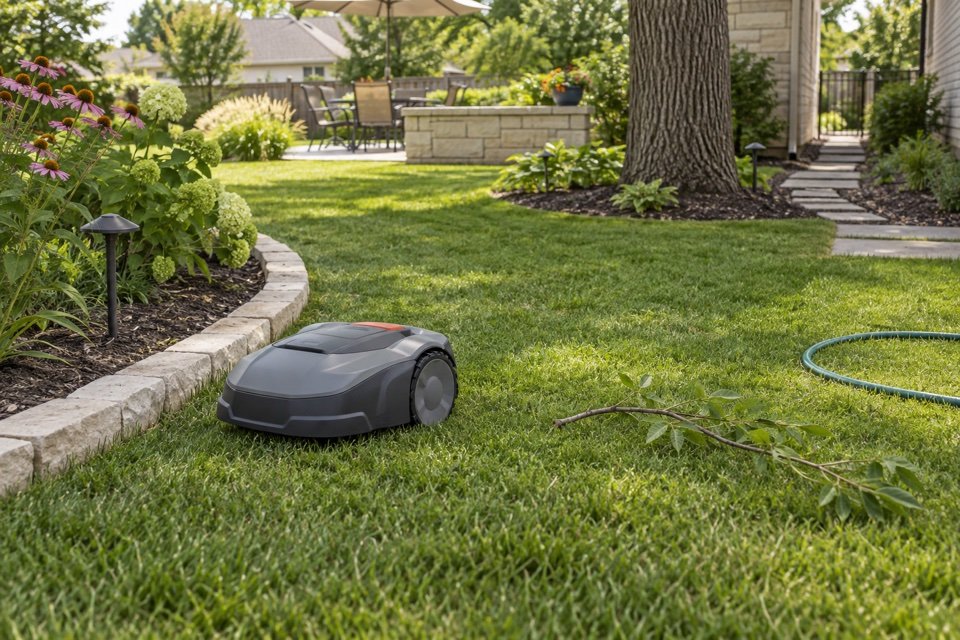
The time commitment changes; it does not disappear. The charging station must be placed correctly. Boundary wires, guide wires, reference stations or digital maps need accurate setup. Blades require inspection and replacement. Wheels and the underside collect grass. Software, connections and schedules may need attention. A storm, power interruption, damaged wire or landscape change can stop the routine until someone diagnoses it.
The lawn also has to be prepared for unattended travel. Low branches, exposed roots, holes, loose edging, deep ruts, steep transitions and unprotected drop-offs can become recurring trouble spots. Gates must allow access when the machine is scheduled to pass. Narrow strips and separate front and back lawns may require additional routing, another charging arrangement or manual movement.
A robot is most successful when the landscape supports it. That may mean widening a narrow passage, correcting a drainage problem, leveling a rough area, creating a stable edge or reorganizing beds so the machine can turn predictably. If the yard constantly traps the mower, the promised time savings can disappear.
Where human-operated mowing remains stronger
A trained person can adapt to unusually tall grass, wet areas, heavy leaf cover and rapid weather changes. The operator can choose a different machine, modify the route and decide when mowing would harm the lawn. This flexibility matters in Kansas, where a dry week can be followed by intense rain and fast spring growth, or strong wind can cover a previously clear lawn with branches and debris.
Human-operated equipment can also finish a neglected property in one planned visit. Robotic mowers are designed around frequent, incremental cutting; many are not intended to reclaim tall, dense or overgrown turf. A person can first inspect the site, remove hazards, reduce the height gradually, collect heavy debris and then establish a normal mowing routine.
A human service visit is also an inspection opportunity. A crew may notice:
- Dry arcs, overspray or a damaged head in the irrigation system.
- Scalping caused by uneven grades or an incorrect cutting height.
- Standing water, erosion or mower ruts that point to drainage problems.
- Early weed, disease or insect patterns that deserve closer evaluation.
- Tree roots, low branches or loose hardscape creating a safety concern.
- Bed edges and narrow areas that need trimming beyond the mower deck.
What a robotic mower cannot finish
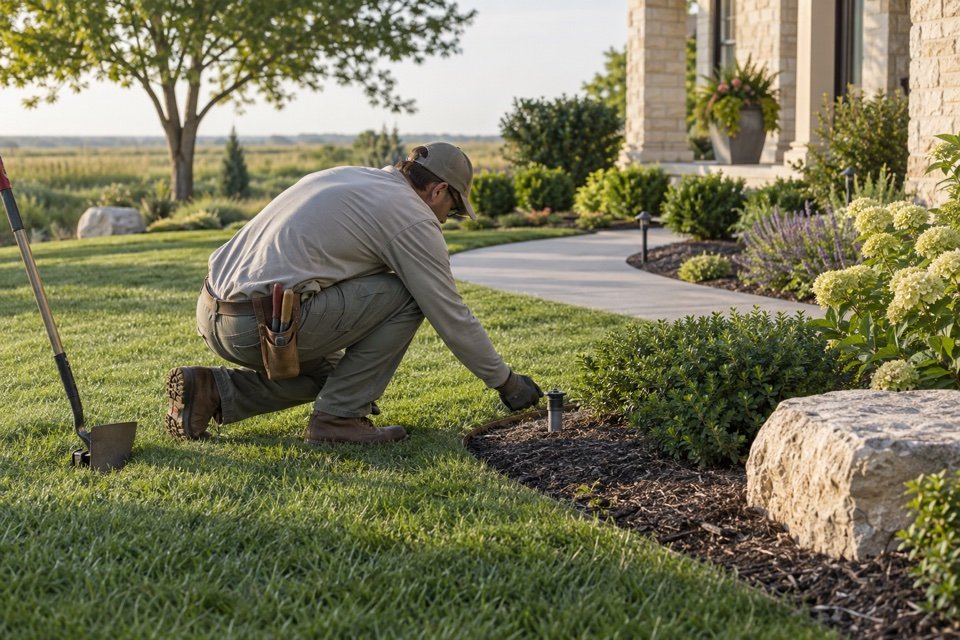
Even excellent robotic mowing only automates the area its blades can reach. It does not normally string-trim beside fences, edge walks, clear clippings from pavement, prune shrubs, remove leaves, repair thin turf or adjust irrigation. Beds still need weed control and mulch. Seasonal cleanup still has to happen. Storm debris must be removed before the mower operates.
This distinction matters when comparing cost. A robot may reduce the hours devoted to open-area mowing, but it does not automatically replace a complete lawn care and seasonal cleanup service. Decide whether you want to automate one repeated task or transfer responsibility for the overall appearance and health of the property.
Compare the real costs of both approaches
A robotic system has a larger upfront commitment than its shelf price may suggest. The complete cost can include the mower, charging station, wire or positioning equipment, professional installation, electrical work, replacement blades, battery service, repairs and possible landscape changes. Some features may depend on an app, cellular connection, subscription or compatible network.
Human-operated care spreads cost differently. A property owner who mows personally buys and maintains equipment and gives the job time each week. A professional service provides equipment, labor, transport and scheduling through recurring visits. Extra work such as leaf removal, bed care or storm cleanup may be priced separately, but a person can handle several related tasks during the same visit.
Compare costs over several seasons and include your own time. Also consider reliability. If a robot stops while the owner is away, who can clear the error? If a service day is delayed by weather, how quickly will the crew return? The better choice is the one that fits both the property and the level of responsibility you want to retain.
Safety still requires a person in charge
Robotic mowers may use lift, tilt, collision and object-detection systems, but they remain powered cutting machines. Safety features and capabilities vary by model. The Consumer Product Safety Commission tracks a voluntary safety standard specifically for robotic battery-powered electrical lawnmowers, and owners should confirm that a product is intended for the site and follow its manual.
Before either robotic or human-operated mowing, remove stones, wire, toys, hoses and branches. Keep children, pets and bystanders away from the operating area. Do not defeat guards, sensors, shutoffs or other safety systems. Isolate the power source before touching blades or clearing the underside. For a robot, use the required stop control and remove or disable the battery as instructed. For conventional equipment, follow the manual for battery removal, key removal or spark-plug disconnection.
Terrain deserves special attention. A model’s maximum advertised slope is not permission to operate beside every ditch, retaining wall, pond or drop-off. Wet turf changes traction, and an open edge can create a different risk than an ordinary hill. OSHA advises surveying terrain and establishing safe distances around rollover and drop-off hazards for operated mowers. Robotic equipment also needs a conservative boundary that keeps it well away from unsafe edges.
Central Kansas conditions can change the decision
Kansas wind regularly moves small limbs, seedpods, trash and landscape material onto lawns. Thunderstorms can create saturated ground and washouts. Summer heat can stress turf and batteries, while cold weather ends the active mowing season. A robotic schedule should never continue simply because the calendar says to mow. Someone needs to adjust operation for growth, moisture, heat, drought stress and debris.
Grass type matters as well. K-State Research and Extension recommends mowing at an appropriate height and avoiding removal of more than one-third of the leaf blade at a time. A robot’s frequent schedule can support that principle when it is set correctly. However, the machine cannot decide that a stressed lawn needs a higher cut, that wet soil should be left alone or that a suddenly overgrown area needs to be reduced gradually unless a person changes the plan.
A hybrid plan is often the most practical
The strongest comparison is not always robot versus person. It may be robot plus person. A robotic mower can maintain an open central lawn several times per week while the homeowner or landscape crew handles trimming, edges, beds, irrigation and seasonal work on a less frequent schedule. The robot performs consistent repetition; the person supplies inspection, correction and skilled detail.
Commercial and institutional properties can use the same principle. Automation may free staff to focus on pruning, cleanup, repairs and landscape improvements, but the machine still needs oversight and a safe operating plan. Research on golf-course use has similarly described robots as tools that shift staff time rather than eliminating the need for turf managers.
Use this property checklist before choosing
- Measure the actual mowing area and identify every disconnected section.
- Mark slopes, drop-offs, drainage channels, soft areas, exposed roots and narrow passages.
- List obstacles that change often: pets, toys, hoses, branches, furniture and vehicles.
- Confirm a protected charging location with suitable electrical service.
- Ask how the model establishes boundaries and what happens if positioning or connectivity is lost.
- Review theft protection, weather limits, blade service and local repair support.
- Decide who will clear the lawn, inspect results and respond to alerts.
- List the remaining work—edging, trimming, cleanup, beds, irrigation and seasonal care.
- Compare the complete multi-year cost with personal mowing or professional service.
The best system still starts with a workable landscape
A robotic mower can be an effective labor-saving tool on the right property. Human-operated care remains more adaptable and can address the many details beyond the mower’s route. Neither approach corrects poor drainage, an awkward layout, failing irrigation or turf growing where another surface would perform better.
CPS Home & Garden helps homeowners, businesses, property managers and HOAs in Great Bend and Central Kansas evaluate how the whole property functions. If your lawn is difficult to mow—whether by person or robot—the practical solution may begin with grading, irrigation, cleaner bed lines, improved access or a better landscape plan.
Frequently asked questions
Can a robotic mower completely replace lawn service?
Usually not. A robotic mower can automate frequent grass cutting, but edging, trimming, cleanup, irrigation checks, weed control, seasonal work and diagnosing turf problems still require a person.
Do robotic mowers work on uneven Kansas lawns?
Capability varies by model. Slopes, holes, exposed roots, soft ground, narrow passages and abrupt edges can limit performance or require landscape changes. Compare the property's measured conditions with the manufacturer's limits.
Do robotic mowers leave grass clippings?
Most robotic mowers cut frequently and leave very small clippings in the turf. Those clippings are normally difficult to see, but excess growth, wet grass or an interrupted schedule can produce a less tidy result.
Is a robotic lawn mower safe around children and pets?
It is still a powered cutting machine. Follow the manufacturer instructions, inspect safety features, clear the work area and schedule operation only when children, pets and bystanders are not on the lawn.