
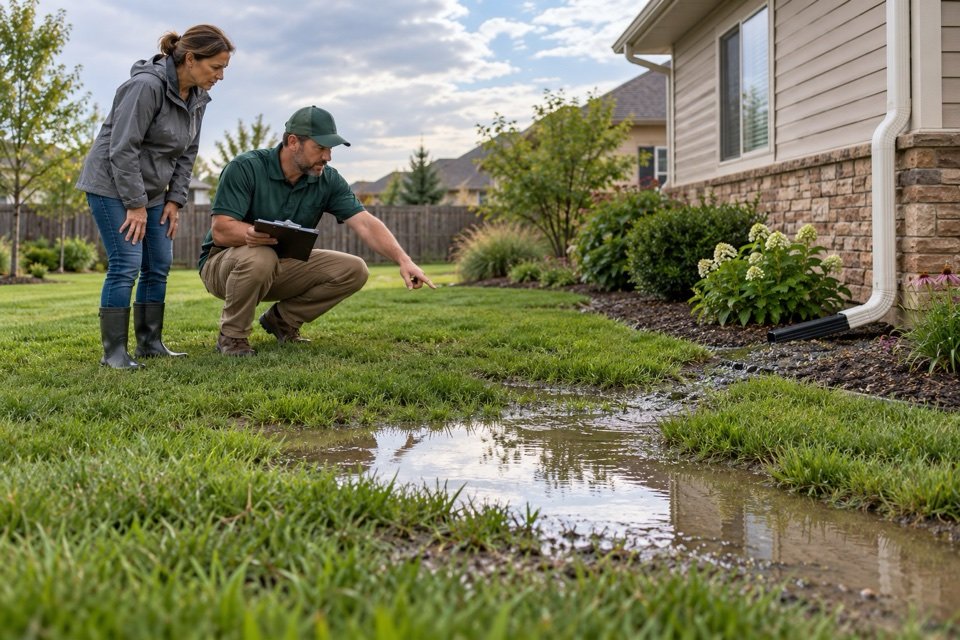
Standing water is one of the easiest landscape problems to see and one of the easiest to misdiagnose. A low area fills after rain, so the first reaction is often to add soil, bury a pipe or cover the mud with gravel. Sometimes that improves the situation. Sometimes it only moves the water a few feet, traps it against another surface or hides the evidence until the next heavy storm.
The better approach is to treat the yard as one connected water system. Rain lands on the roof, driveway, patio, planting beds and lawn. Irrigation adds another source. Soil and slopes determine whether that water soaks in, spreads out or concentrates in a low point. The correct repair depends on the entire path—not only the puddle at the end.
This guide explains how Central Kansas property owners can observe that path, separate drainage problems from irrigation problems, and understand which solutions may fit before work begins.
Start with three questions: where, when and how long?
Before changing the site, document what happens. The most useful clues are location, timing and duration.
- Where does the water first appear? Beside a downspout, along a fence, at the edge of a patio, in wheel tracks or in the center of the lawn?
- When does it appear? Only during intense rain, after almost every shower, when a certain sprinkler zone runs or even during dry weather?
- How long does it remain? Does the surface drain shortly after the storm, or stay soft and saturated after nearby areas have dried?
- What changed? Consider a new patio, settled soil, gutter work, construction next door, a damaged sprinkler, repeated equipment traffic or a bed that was recently raised.
Take wide photos that show the house, hard surfaces and direction of flow, then closer photos of erosion, sediment and damaged turf. A short video during rain can reveal more than a dry-site photo because it shows the water moving. Observe from a safe location; do not step into water near electrical equipment or enter a flooded structure.
The six most common causes of a wet yard
1. Roof runoff is concentrated in the wrong place
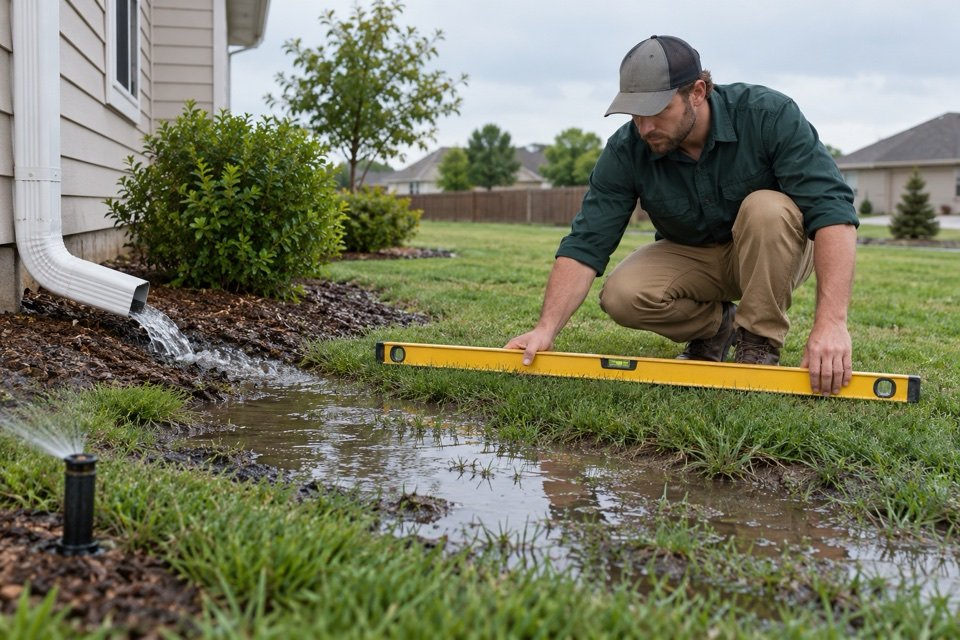
A roof collects water from a large area and delivers it through a few downspouts. If a downspout ends beside the foundation, at the top of a low lawn strip or against edging that blocks flow, even a small storm can create a recurring wet spot. A clogged gutter, disconnected elbow or crushed underground extension can change a previously reliable route.
Redirecting roof water to a suitable vegetated area may reduce runoff, but the discharge point must have enough space and slope to accept it. Moving the end of a downspout without studying the outlet can simply place the same volume beside a walk, fence or neighboring property.
2. The surface grade has settled or was never continuous
Water follows elevation. A shallow depression may form as disturbed soil settles, tree roots decay or repeated traffic compresses the surface. Patios, walks, curbs and landscape edging can also create small dams. The yard may look nearly flat when dry, yet a difference of only a few inches can decide where water stops.
The key is continuity. Raising only the visible low spot is not a complete plan unless water still has a safe route away from structures and across the property. Final grade must work around door thresholds, siding, foundations, utilities, existing trees and neighboring elevations.
3. Compacted soil cannot accept water quickly enough
Healthy soil contains pore space that moves air and water. Vehicle traffic, construction staging and repeated travel when soil is wet can press particles together and reduce infiltration. The University of Minnesota Extension notes that compaction reduces both water infiltration and drainage. On a residential property, the pattern may show up as thin turf, hard bare soil and puddles that follow a route used by equipment or foot traffic.
Compaction and bad grade can exist together. Loosening soil may help infiltration in the right setting, but it will not overcome a basin with no outlet. Likewise, reshaping the surface without restoring damaged soil can leave an area slow to absorb water.
4. Irrigation is adding water faster than the site can use it
If the wet area appears when it has not rained, test irrigation before planning a drainage project. Run one zone at a time. Look for a broken fitting, a head that does not retract, overspray against pavement, water bubbling from the soil or a zone that continues to seep after it shuts off. Compare the wet area with the symptoms in our guide to sprinkler system warning signs.
Even a system without a broken component can create runoff when watering is too long for the soil or slope. Correcting coverage, scheduling and leaks may solve the source more directly than installing a drain for irrigation water that should never have collected there.
5. Hard surfaces send runoff into a narrow area
Roofs, driveways, patios and compacted paths do not absorb water like healthy planted soil. Their runoff may converge at one edge or pass through a narrow side yard. A patio that is attractive and properly built in isolation can still affect the broader landscape if its discharge route was not coordinated with surrounding grades.
Watch both the upper and lower edges of hardscape. Water may leave the surface correctly but meet a raised bed, fence line or low turf area immediately afterward. This is why our landscape layout warning signs article treats repeated mud and erosion as connected design clues.
6. Water is coming from beyond the obvious work area
Runoff may enter from an uphill part of the same property, a street, alley, drainage easement or adjoining land. Persistent wetness can also be related to plumbing, a service line or other subsurface condition. Do not assume every unexplained wet area is rainwater. Water present in dry weather, unusual odor, soil movement, rapidly increasing utility use or a sudden saturated area deserves prompt investigation by the appropriate qualified professional.
Why the most common quick fixes fail
“Just add dirt to the low spot”
Fill may be part of a grading correction, but placement matters. Soil added against siding, over a tree’s root flare or across an intended drainage route can create a different problem. If the raised area has no smooth transition to a safe outlet, water may collect on its new uphill edge.
“Put gravel over the mud”
Loose rock can provide a temporary walking surface, but it does not automatically improve drainage. Fine soil may migrate into the voids, and the rock may sink into wet subgrade. Gravel works best when it is one designed layer in a system with separation, slope, capacity and maintenance—not as a cover over an unknown cause.
“Install a French drain everywhere”
A French drain can intercept subsurface water in appropriate conditions, but it is not a universal answer for surface runoff. It needs suitable elevation, materials, installation and an acceptable outlet. A perforated pipe placed in a flat trench with nowhere to discharge may become storage rather than drainage.
“Dig a trench to the property line”
Moving water off one area does not justify creating erosion, ice or flooding somewhere else. The receiving area, route, utilities, easements and local requirements all matter. A solution should slow, spread, absorb or safely convey water without transferring the damage.
Match the solution to the cause
A strong drainage plan often combines smaller corrections rather than relying on one oversized feature. The options below are not interchangeable.
Gutter and downspout correction
Clean and repair gutters, confirm each downspout connection, and direct discharge to an appropriate area that slopes away from the structure. Extensions must remain secure and maintainable. Where underground conveyance is used, access for inspection and cleanout is important because roots, sediment, crushing and freezing conditions can affect performance.
Positive grading and shallow swales
Grading reshapes the surface so water moves along a planned route. A swale is a broad, shallow channel that can carry flow while remaining mowable or planted. The route should be gradual, stable and continuous. It must fit around foundations, trees, doors, walks, utilities and the intended receiving area.
Catch basins and solid pipe
A surface inlet can collect concentrated runoff at a predictable low point and convey it through solid pipe. The basin needs the right elevation and routine sediment removal. The pipe needs proper slope, durable connections and a safe outlet. A basin placed away from the actual low point will leave water behind.
French drains and subsurface interception
Where water is moving through saturated soil rather than simply across the surface, a properly designed aggregate-and-perforated-pipe system may intercept it. Filter fabric, stone, trench elevation, outlet and protection from sediment all influence performance. It should not be installed until the water source and discharge path are understood.
Soil restoration and lawn repair
Compacted areas may benefit from targeted soil improvement after traffic and grading issues are addressed. Lawn repair should come near the end so drainage construction does not destroy new turf. Before seeding or sodding, correct the reason the old lawn thinned. Our guides to lawn recovery after heat and lower-maintenance landscape design can help with the finish phase.
Rain gardens, dry creek beds and planted drainage
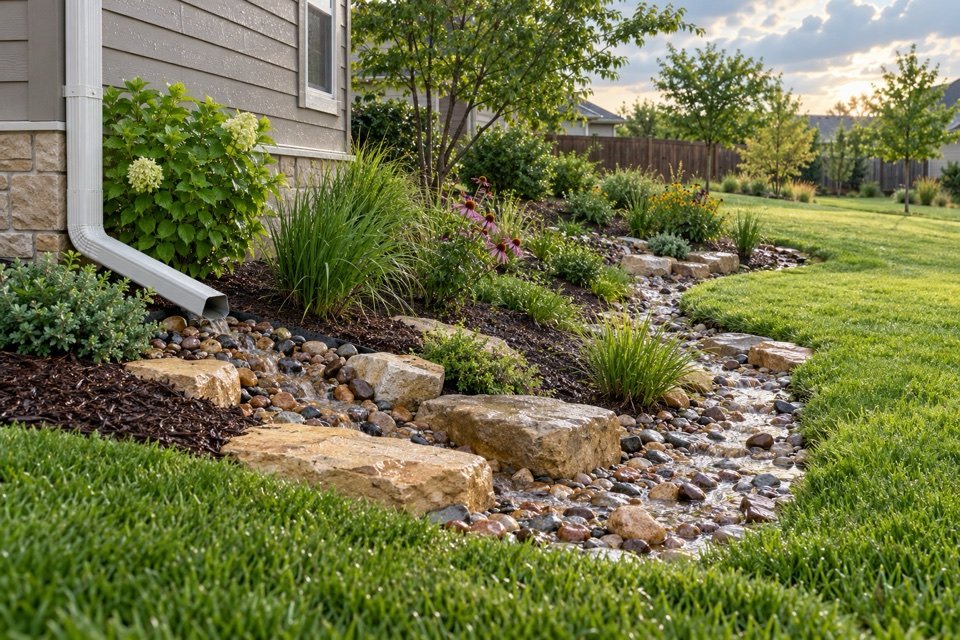
Vegetated practices can slow runoff, encourage infiltration and turn a water route into a landscape feature. The U.S. EPA identifies rain gardens, bioswales and permeable surfaces as green-infrastructure tools that can reduce localized pooling. These features still require correct siting, soil evaluation, overflow planning and plant selection. A rain garden is not simply a planting bed placed against a wet foundation.
Hardscape and layout changes
Sometimes the most durable fix is to change how an area is used. A narrow muddy route may work better as a properly based path. A low lawn corner may become a planted receiving area. A patio edge may need coordinated grading beyond the slab. When several improvements are planned, use our property priority guide to put drainage and hidden systems ahead of final surfaces.
Know when the problem needs faster attention
Routine landscape puddling is different from a condition that threatens people or structures. Seek prompt help when water is entering a home or occupied building, soil is collapsing, a retaining structure is moving, wastewater may be involved, electrical equipment is wet, or the source continues during dry weather. Keep people and pets away from unsafe areas.
Recurring water beside a foundation, steps or pavement should also be evaluated before cosmetic work. Saturated soil can contribute to settlement, frost-related movement, erosion and repeated turf loss. The earlier the water path is documented, the easier it is to avoid covering up the cause.
Before excavation, identify public and private utilities
Drainage work often involves trenching, grading or installing plant material. Kansas 811 says a locate request must be made at least two full working days before excavation, excluding the day of the request, weekends and holidays, and no more than 20 calendar days before the planned start. Marks show the approximate location of participating utilities; privately owned irrigation, lighting, invisible fencing, septic components and similar facilities may require separate identification.
Also confirm easements, drainage restrictions and any permit requirements that apply to the property and scope. Utility marking does not replace permission to discharge water or approval required by a local authority.
A practical five-step plan for homeowners
- Observe: photograph the site during and after rain, note timing and mark the flow path.
- Separate sources: inspect gutters and downspouts, then test irrigation one zone at a time during dry weather.
- Measure: identify true low points, surface barriers and the elevation of a possible safe outlet.
- Plan the whole route: choose how water will be slowed, absorbed or conveyed from its source to its final destination.
- Build in order: locate utilities, correct drainage and grade, repair affected hardscape or soil, then restore beds and lawn.
If the project will be completed in phases, preserve the final route in every phase. Do not install a new bed, fence or path across a future swale or pipe alignment. Our guide to planning larger property improvements explains how to define scope before construction begins.
Need help understanding water movement on your property?
Send CPS clear photos of the wet area, the surrounding property and any nearby downspouts or irrigation. Tell us when the water appears and how long it remains so we can start with the right questions.
Frequently asked questions
Why does water suddenly pool in my yard?
Look for a recent change such as a blocked downspout, settled soil, irrigation leak, new hard surface or repeated traffic. A storm may reveal a condition that developed gradually. More than one source can feed the same low spot.
Will adding topsoil fix a low, wet area?
Only when it is part of a grading plan with a continuous, safe outlet. Random fill can redirect water toward a foundation, trap it beside pavement or bury important tree and building details.
Do I need a French drain?
Not necessarily. A French drain is designed for certain subsurface-water conditions. Surface grading, downspout correction, irrigation repair, a swale, catch basin or planted feature may better match the cause. Any pipe or drain still needs a workable outlet.
How long is too long for water to stand?
Judge the pattern rather than one universal number. A temporary puddle during an unusually intense storm is different from saturation that repeatedly remains after nearby soil has drained. Persistent softness, odor, turf decline, erosion or water near a structure warrants closer evaluation.
Can artificial turf be installed over a wet area?
Artificial turf requires appropriate base preparation and drainage; it should not be used to conceal an unresolved water source. Correct grading, runoff and subsurface conditions first, then design the base for the site. Learn more on our artificial turf page.