
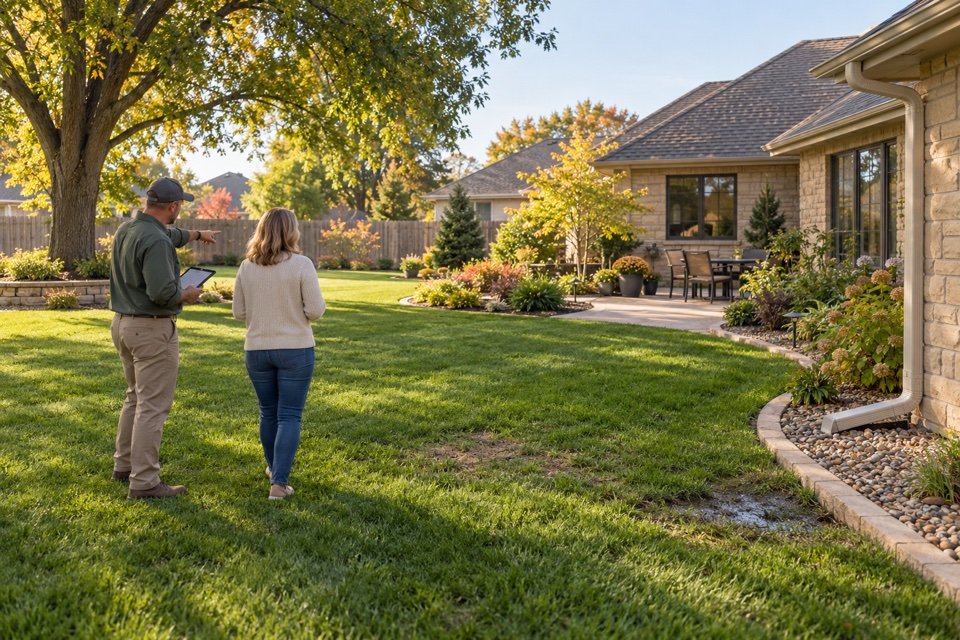
Most properties do not present one perfectly isolated problem. The grass is thin near a low spot. A sprinkler sprays the walk. Mulch washes out during heavy rain. The patio has settled, shrubs crowd the path, and the owner would also like a better place to sit outside. Every item may be real, but trying to solve all of them at once—or choosing the most visible one first—can waste time and money.
A successful outdoor improvement plan follows cause and effect. It protects people and structures, controls water, establishes grades and access, coordinates hidden systems, then finishes with hardscape, planting and lawn surfaces. The exact scope changes from property to property, but the decision order is remarkably consistent. Use this guide to decide what belongs at the top of your list and what can wait.
First, stop thinking in separate chores
A muddy path, dying turf and uneven pavers may look like three unrelated repairs. They could also share one cause: water flowing across a compacted route and collecting beside a settled edge. Reseeding the lawn, adding another paver and covering the mud with mulch might improve the appearance briefly without correcting the system.
Begin with a whole-property walkthrough. Look from the roofline to the street or other safe outlet. Notice where people move, where equipment must enter, how beds and lawn connect, and which surfaces shed or absorb water. Our guide to seven landscape layout warning signs can help identify patterns that repeatedly create maintenance problems.
Priority 1: immediate safety and active damage
Conditions that can hurt someone or allow damage to continue should move ahead of appearance. Examples include a loose step, severe trip edge, unstable wall or fence, exposed sharp material, a dangerous hole, water entering a structure, a hanging limb near an occupied area or electrical equipment in contact with water. Block access to an unsafe area and involve an appropriately qualified professional when the work is outside normal landscaping.
Not every crack or puddle is an emergency. The test is consequence: could someone reasonably be injured, could the condition worsen quickly, or could delay allow water to damage a structure? Document the location with wide and close photographs, note when it appears, and avoid covering evidence before the cause can be evaluated.
Priority 2: water, drainage and final grade
Water influences almost every improvement that follows. It affects foundations, soil stability, plant health, turf, patios, walks and fences. Before installing attractive finishes, trace roof runoff, irrigation, rain and neighboring surface flow across the site. Observe the property during rain when it is safe to do so, then note where water starts, slows and exits.
A low area does not automatically need a drain, and a drain does not help unless it has a suitable discharge route. The correct response may involve downspout routing, grading, a swale, soil improvement, drainage components or changes to nearby hard surfaces. The objective is not simply to move water away from one spot; it is to direct it safely without transferring the problem somewhere else.
Priority 3: utilities and hidden systems
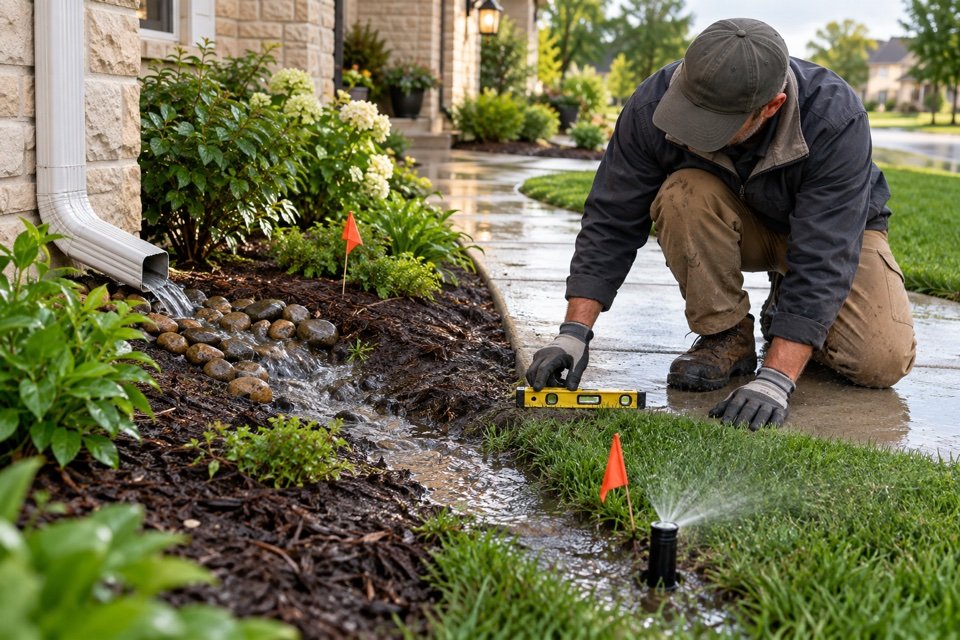
Once the intended grades and water routes are understood, identify what runs underground. Public utility marks do not necessarily include private irrigation, lighting, invisible fencing, septic components or power serving an outbuilding. Kansas 811 says to request a locate before every digging project, including planting trees and shrubs or installing fences and decks. Private facilities may need a private locator.
Test the irrigation system before replacing lawn or expanding beds. Run every zone and look for leaks, tilted or buried heads, overspray, dry arcs, runoff and valves that do not close fully. EPA WaterSense recommends regular inspection and seasonal schedule changes. Our article on sprinkler system warning signs explains what uneven coverage, runoff and higher bills may reveal.
Plan final irrigation coverage around the completed landscape—not the old one. A future patio removes irrigated area. A wider bed may need drip or different coverage. New trees and fences affect spray patterns. Coordinating these changes before finish work prevents reopening a completed surface later.
Priority 4: circulation, access and structural work
Decide how people, pets, deliveries, trash bins and maintenance equipment should move through the property. Worn shortcuts and muddy gates often reveal that the existing route is inconvenient. A practical circulation plan determines where walks, steps, patios, fences and equipment access belong.
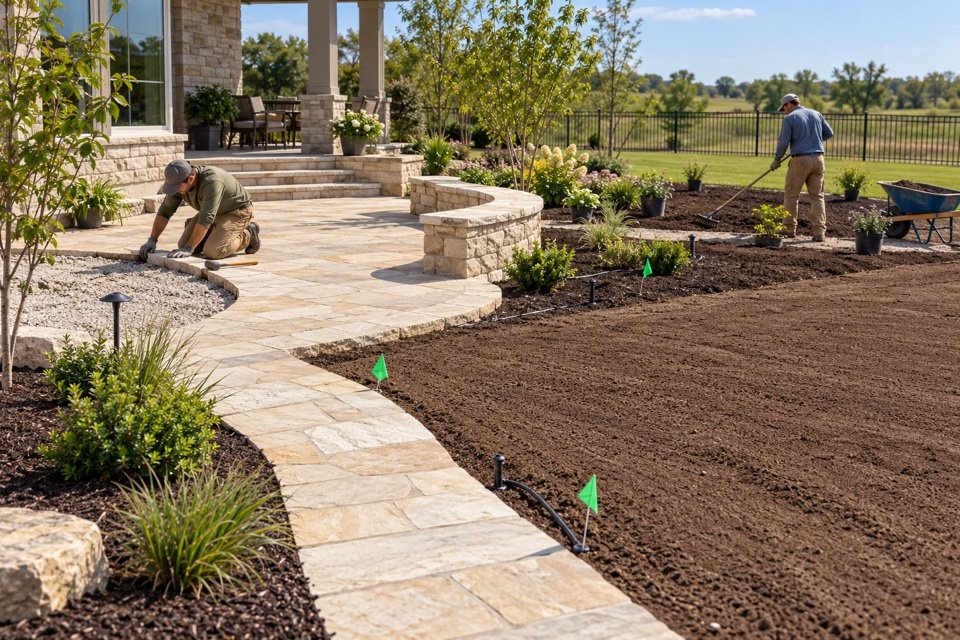
Hardscape and construction usually happen before final planting and turf because they require excavation, material delivery, compaction and repeated travel. Establish dimensions, elevations, drainage and door clearances before choosing a surface only for its appearance. If the project is large, our guide to planning a property improvement with fewer surprises covers scope, sequencing and decision-making.
Priority 5: soil, planting beds and irrigation adjustments
With major grades and construction established, prepare the living parts of the landscape. Soil condition matters more than a decorative top layer. Compaction, poor depth and inconsistent moisture can make good plants fail. EPA WaterSense notes that healthy soils and properly graded sites support infiltration and can reduce irrigation demand.
Choose plants for mature size, light, wind, drainage and available maintenance—not only how they look in a container. Group plants with similar water needs, give shrubs room to stay off walks and siding, and make bed shapes easy to edge. Our lower-maintenance landscape guide explains why thoughtful bed lines, plant spacing and access save work later.
After beds and major plants are placed, adjust irrigation heads, drip lines and schedules to match the new layout. Confirm that water reaches roots rather than pavement and that the system does not create runoff on the finished grade.
Priority 6: lawn repair or replacement
Lawn is often the final large surface because earlier work can damage it. Trucks, wheelbarrows, excavation and material staging compact soil and create traffic routes. Repairing turf first only to cross it during patio or drainage work means paying twice.
Before choosing seed, sod or artificial turf, identify why the old lawn failed. Shade, compaction, irrigation coverage, drainage, soil, pets, heat and traffic need different solutions. If the damage follows hot weather, use our guide to helping a lawn recover from summer heat before assuming complete replacement is necessary.
Some narrow, shaded or heavily traveled areas may be better as a path, planting bed or correctly installed artificial turf. The goal is not to place grass everywhere. It is to use a surface that fits the conditions and how the area is used.
Priority 7: maintenance systems and equipment
Once the layout works, decide how it will be maintained. A property with clean bed lines, logical access and plants suited to their space is easier to care for with any equipment. An inefficient layout stays frustrating even after buying a more powerful mower.
For owners comparing tool systems, our gas versus battery equipment guide covers runtime, noise, maintenance and total cost. If automation is being considered, our human-operated versus robotic lawn care guide explains where repetitive mowing can be automated and where inspection, trimming and judgment still require a person.
Choose equipment after measuring the real work area and understanding the heaviest conditions it will face. The right maintenance plan may be personal care, professional service or a hybrid. What matters is that someone remains responsible for inspecting irrigation, drainage, turf health and changing site conditions.
Priority 8: appearance and optional upgrades
Finishing touches matter, but they perform best after the property functions correctly. Decorative rock cannot repair drainage. New mulch cannot solve bad plant spacing. Outdoor lighting should follow final paths and planting, not conflict with later excavation. A fire feature, pergola or outdoor kitchen should be coordinated with access, utilities, clearances and the way the space will actually be used.
This stage is where style decisions become safer and more enjoyable. Materials can be selected with confidence because the grades, systems and circulation underneath them have already been considered. The result looks intentional instead of becoming a collection of unrelated upgrades.
How to phase the work without losing the plan
A complete plan does not mean everything must be built at once. It means every phase supports the final result. A useful phased approach might look like this:
- Stabilize: address urgent safety, active water damage and severe drainage issues.
- Establish: set final grades, locate utilities, correct major irrigation problems and protect access.
- Build: complete patios, walks, walls, fences, decks and structural improvements.
- Support: prepare soil, install beds and plants, then make final irrigation adjustments.
- Finish: repair or replace lawn surfaces, add mulch and complete lighting or decorative details.
- Maintain: create seasonal inspection and care routines for the completed property.
Season affects the schedule. Some work is best completed while plants are dormant; other work depends on soil condition, temperature or irrigation availability. The Central Kansas fall landscaping checklist can help prepare lawn, beds, irrigation and outdoor spaces before winter while larger plans are being developed.
A 20-minute priority walkthrough
- Photograph immediate safety risks and keep people away from unstable areas.
- Trace water from roof, irrigation and high ground toward its eventual outlet.
- Mark wet spots, erosion, settled surfaces and recurring turf failure.
- Run every irrigation zone and record leaks, overspray and missed areas.
- Notice worn shortcuts, tight gates and places equipment cannot reach.
- List proposed patios, fences, trees or other work that will require digging.
- Identify healthy features worth keeping so the plan is not based only on replacement.
- Separate urgent corrections, enabling work and optional appearance upgrades.
- Write one desired outcome for the whole property, not a separate wish for every trouble spot.
A better order creates a better investment
The most visible project is not always the best first project. When safety, water, grade, utilities and access are handled before finish materials, each improvement lasts longer and supports the next. That order also makes estimates easier to compare because contractors are pricing toward the same complete outcome rather than competing patches.
CPS Home & Garden helps homeowners, businesses, property managers and HOAs in Great Bend and Central Kansas assess the full property and turn a long problem list into a practical sequence. Send clear photos, the property location, what keeps happening and what you hope the finished space will do. The right first step often becomes clearer when the entire site is considered together.
Frequently asked questions
What outdoor project should be completed first?
Address immediate safety risks and water moving toward structures first. Then correct grading, drainage, utilities and irrigation before installing hardscape, planting beds and final lawn surfaces.
Can landscaping projects be completed in phases?
Yes. Begin with one overall plan showing final grades, drainage, utilities, access and major features. The work can then be divided into phases that do not damage or conflict with later improvements.
Should irrigation be repaired before replacing a lawn?
Usually, yes. Test coverage, pressure, leaks and zone operation before investing in seed, sod or planting. Final adjustments should match the completed beds, grades and lawn areas.
When should I contact Kansas 811 for a landscaping project?
Kansas 811 says to request utility locates before every digging project, including planting trees or shrubs and installing fences or decks. Private lines such as irrigation and invisible fences may require a private locator.