
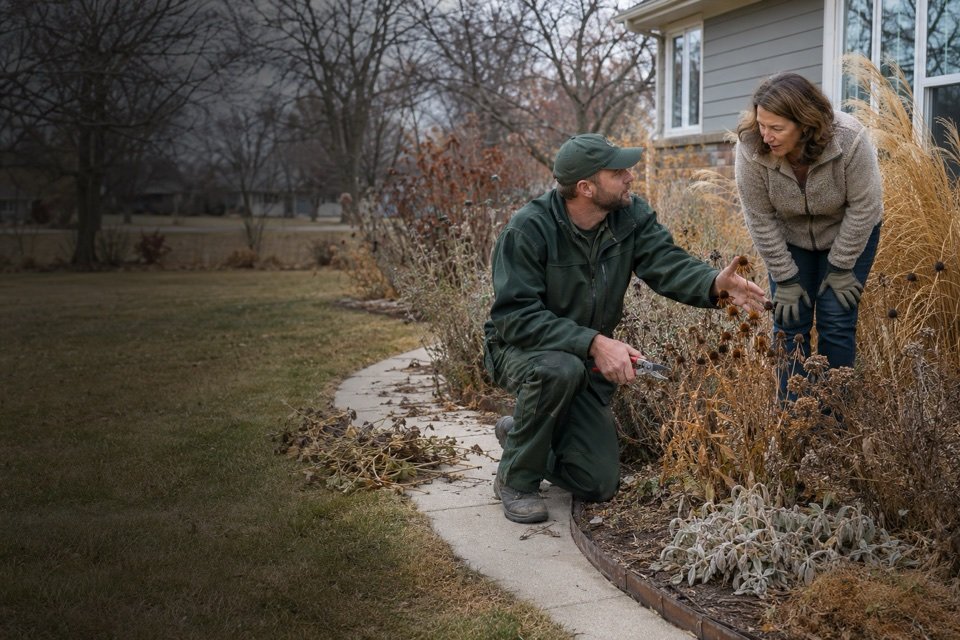
For years, the standard picture of fall cleanup was a completely bare bed: every perennial cut to the ground, every leaf bagged and every ornamental grass reduced to a short bundle. It looks finished in one afternoon, but it is not automatically the healthiest, most attractive or most useful way to prepare a landscape for winter.
Healthy seedheads can add structure when the rest of the garden is dormant. Upright grasses can move in winter light. Some stems and leaf litter provide shelter or nesting material for beneficial insects. At the same time, wet leaves can smother turf, diseased stems should not remain, and debris must not block a drain, walkway or building detail.
The better question is not “Should we clean up?” It is “What needs to be removed here, and what can keep working through winter?” This guide gives Central Kansas property owners a practical way to make that decision without turning the yard into either a stripped landscape or an unmanaged tangle.
Selective cleanup starts with five priorities
Before picking up a rake or pruner, evaluate each area in this order:
- Safety: clear steps, walks, entries, driveways, utility access and sight lines.
- Water: keep gutters, drainage inlets, swales, downspout outlets and low hardscape areas open.
- Plant health: remove known disease, invasive weeds and material that is crushing healthy crowns.
- Winter function: preserve useful structure, habitat, wind protection and root-zone cover where appropriate.
- Appearance: create clear edges and intentional groupings so the property reads as cared for.
This order matters. A beautiful stand of grass should not hide a step. A habitat leaf layer should not fill a channel drain. A perfectly clear bed is not a success if the cleanup removed next spring’s flower buds or left bare soil exposed to wind.
Remove material that presents a clear problem
Some decisions are straightforward. Remove annual vegetable plants that carried serious disease, invasive weeds before they spread seed, broken stems lying across routes, windblown trash and material packed against siding, vents or mechanical equipment. Keep address numbers, hydrants, meters and utility access visible.
Clean up plants with a confirmed disease rather than treating every brown stem as infected. Bag or dispose of affected material according to local guidance instead of mixing it into a habitat pile or a home compost system that may not reach a temperature sufficient to reduce the problem. Clean pruners before using them on healthy plants.
Location changes the answer. A stiff stem that is harmless at the back of a deep bed could catch clothing beside a narrow walk. A loose grass clump that looks attractive on a protected patio may break apart and clog a street inlet on a windy corner. Manage the actual site—not a generic checklist.
Leave healthy ornamental grasses for winter structure
Ornamental grasses are one of the easiest places to stop over-cleaning. Kansas State Research and Extension advises that the best general time to cut them back is late winter to early spring, before new growth begins. That means healthy grasses do not need to be cut in November simply because they have turned brown.
Standing grasses catch low winter light, add movement and give a bed height after flowers have faded. Their bases can also provide protected spaces for beneficial insects. Leave them when the clump is upright, correctly placed and not interfering with visibility, access, lighting or drainage.
Cut or tie a grass earlier if it has collapsed across a route, repeatedly blocks a fixture, scrapes a vehicle, creates a fire or equipment concern, or breaks apart so heavily that it overwhelms surrounding maintenance. Do not tightly bind a healthy clump for months just to make it look narrow; trapped moisture and compressed foliage may create a different problem.
When the time comes, use clean, sharp tools and cut the old foliage before new blades emerge through it. Different grasses vary in size and habit, so identify the plant and protect the crown rather than applying one exact height to every species.
Keep sturdy perennial stems and seedheads—selectively
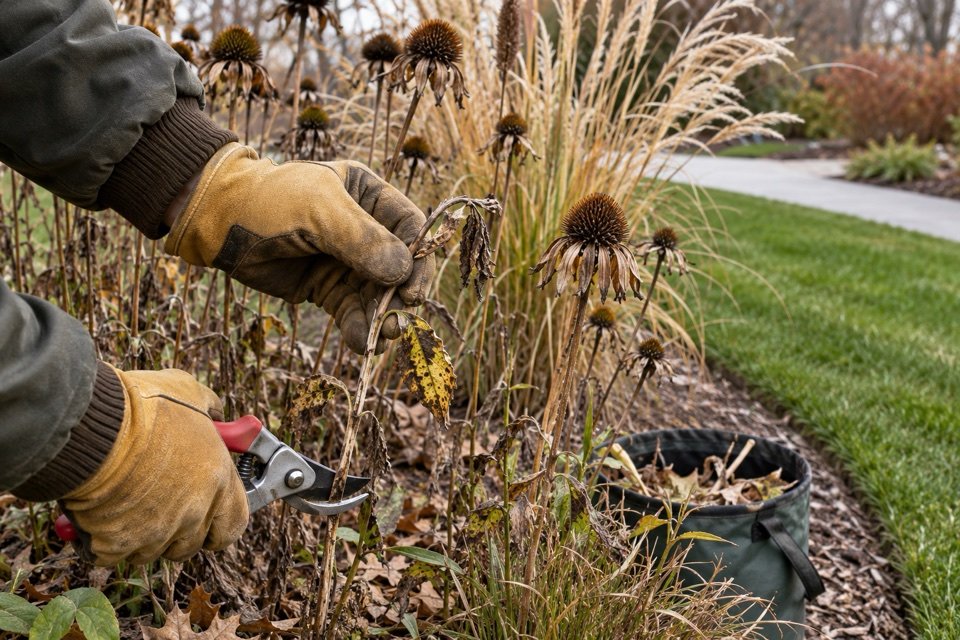
Coneflowers, black-eyed Susans, sedums and other perennials can hold attractive seedheads after the growing season. Some provide food for birds, and pithy or hollow stems can become nesting resources for small native bees. The Xerces Society recommends leaving suitable stems through fall and winter rather than removing every stalk during autumn cleanup.
“Leave the stems” does not mean every brown plant must stay exactly as it falls. Keep sturdy, healthy groups that stand well. Remove slimy foliage, collapsed material covering neighboring crowns, plants with known disease and stems that create a hazard. If the front edge of a bed looks chaotic, clean that edge while retaining a deeper band of structure behind it.
Avoid cutting stems into tiny pieces if habitat is the goal. If you plan a spring cleanup, wait until conditions have warmed and observe whether insects are using the material. Some gardeners cut selected stems higher rather than at the ground so the remaining hollow or pithy section can still offer nesting opportunities.
Manage leaves by location, volume and goal
Leaves are neither pure waste nor appropriate everywhere. A heavy, wet mat left over turf can block light and air, hold moisture against grass and create a difficult spring cleanup. Move it. The same leaves placed loosely in an appropriate bed or designated habitat zone can protect soil and provide winter cover.
For a lawn-first approach, a light layer of healthy, dry leaves may be chopped finely with a mower so the pieces settle between grass blades. Stop when the leaf volume is too heavy to break down or the turf disappears beneath it. If habitat is the priority, move whole leaves gently into selected beds instead of shredding all of them.
Do not pile leaves against tree trunks, plant crowns, foundation details or low evergreen foliage. Keep them out of window wells, drainage channels, street inlets and places where wind will immediately redistribute them. Disease or serious pest history may change whether leaves from a particular plant should remain on site.
A balanced property can use several methods at once: clear the lawn, entries and drains; compost clean excess; and retain whole leaves in a back bed, shrub border or other intentional zone. This is more useful than applying one rule to every square foot.
Prune shrubs according to their biology—not the cleanup date
A seasonal cleanup is not permission to shear every shrub into a smaller shape. Kansas State Research and Extension explains that pruning time depends partly on when a shrub flowers. Spring-flowering shrubs such as lilac and forsythia often carry flower buds on older wood; heavy fall pruning can remove the next display.
Dead, diseased or clearly broken material can be removed when needed. Broader size reduction or renovation should follow the species, flowering habit and condition of the shrub. Many summer-blooming or foliage shrubs are handled in late winter or early spring, while spring-blooming shrubs are often pruned after flowering.
Make selective cuts back to a suitable branch or bud instead of randomly topping stems. Use sharp tools and do not apply wound paint unless a qualified recommendation for a specific situation calls for it. Large limbs, overhead hazards or work near utilities belong with qualified tree professionals.
Keep the lawn, walks and drains functional
Winter interest belongs in planted areas, not across the route to the door. Remove wet leaves, seed stalks and loose grass blades from steps, ramps and walks. Check low spots where debris collects after wind. Clear landscape-light lenses and keep fixtures visible without exposing or damaging cable.
Trace roof and surface water before freezing weather. A downspout outlet buried under leaves can redirect water toward the foundation. A clean-looking grate can still fail if the pipe or outlet is blocked. The CPS guide to freeze-thaw property preparation explains how to inspect the full route from water source to outlet.
Use a blower carefully. Strong air can scatter mulch, expose soil, damage delicate plants and move debris into a neighbor’s property or public drainage. The best tool and power source depend on the property, volume and whether the material is wet; our gas-versus-battery equipment guide covers those tradeoffs.
Use “cues to care” so the landscape looks intentional
A winter garden does not need to be empty to look maintained. Clear design signals help people see the difference between retained structure and neglected debris:
- Crisp edges: define where lawn ends and the planted bed begins.
- Clear foreground: tidy the first few feet beside walks, doors and driveways.
- Grouped structure: keep strong masses of grasses or seedheads rather than isolated weak stems everywhere.
- Visible routes: maintain open steps, paths, gates and service access.
- Defined leaf zones: keep whole leaves within beds or habitat areas, not drifting across pavement.
- Healthy anchors: evergreens, shrubs, stone, lighting and hardscape give the winter view a stable framework.
These cues are especially useful at businesses, rentals and HOA-managed properties where a naturalistic winter garden still needs to communicate reliable care. Confirm any applicable rules before choosing a highly visible habitat zone.

Plan a staged cleanup instead of one severe day
The most practical approach divides the work into three visits.
Late fall: protect function
Remove disease, invasive weeds and safety hazards. Clear turf, drains, walks and building details. Preserve healthy grasses, seedheads and selected leaf zones. Document plants you cannot identify instead of cutting them by guess.
Late winter: prepare for new growth
Cut back ornamental grasses before fresh blades emerge. Complete appropriate shrub pruning based on species and flowering habit. Check beds for frost movement, broken edging, animal damage and debris carried in by winter wind.
Spring: finish with observation
Remove remaining material gradually as temperatures warm and new growth appears. Watch for insects using stems. Redefine edges, address weeds early and assess whether mulch is actually needed before adding another layer. Do not cover plant crowns or pile material against bark.
Staging the work reduces rushed mistakes and spreads labor across the season. It also keeps useful winter structure in place until the landscape is ready to grow again.
A decision guide for each bed
Stand at the edge and ask these questions:
- Can I identify the plant and distinguish dormancy from disease?
- Is the material upright and structurally sound, or has it collapsed?
- Does it block a route, drain, light, window, utility or important sight line?
- Will its seed spread an invasive or unwanted plant?
- Does it add winter form, bird food or useful habitat?
- Would a clean foreground and retained background create a better result?
- Should this task happen now, in late winter or after spring flowering?
If the answer is still unclear, leave the healthy plant temporarily and identify it. Cutting is immediate; replacing the structure or next season’s flowers is not.
How CPS can help
CPS Home & Garden can build a cleanup scope around the property rather than treating every bed alike. That may include lawn and leaf management, bed cleanup, selective cutback, drain and hardscape clearing, edging, shrub review, debris removal and a list of work best scheduled for late winter or spring.
For an estimate, send wide photographs of the full property and closer images of the beds, access routes and problem plants. Note whether the goal is a one-time reset, recurring maintenance, a lower-maintenance redesign or preparation for another improvement. Learn more about CPS lawn care and seasonal cleanup.
Clean up the right things—not everything
Request a practical seasonal cleanup that protects access, plant health, winter appearance and the way your property needs to function.
Request an estimateFrequently asked questions
Should ornamental grasses be cut back in fall in Kansas?
They do not have to be. K-State identifies late winter to early spring, before new growth begins, as the best general time. Leave healthy clumps when they are stable and safely placed.
Should dead perennial stems remain over winter?
Healthy, sturdy stems and seedheads may offer winter interest, food and habitat. Remove disease, invasive seed sources, collapsed material and anything that blocks access or drainage.
Can leaves stay on the lawn all winter?
Do not leave a heavy wet mat over turf. Move whole leaves to appropriate beds or habitat zones, compost clean excess, or finely mulch a light layer when lawn health is the main goal.
When should diseased material be removed?
Remove confirmed diseased material rather than preserving it for winter structure. Separate it from healthy debris and clean tools before moving to healthy plants.
How can the property look maintained without cutting everything?
Keep crisp edges, open routes, clean drains and a tidy foreground. Retain strong plant groups and whole leaves only in deliberate zones.