
Once the mower is stored and the leaves are down, watering is easy to forget. Central Kansas can still have long dry stretches between autumn and spring, and winter wind continues to pull moisture from exposed plants. Roots do not need summer-level irrigation, but they do need enough available moisture to remain healthy.
The right response is not to run every sprinkler on a calendar. It is to check the soil, prioritize the plants most likely to be stressed and water only when conditions allow the water to soak in safely. Soil type, recent precipitation, plant age, sun, wind and drainage all matter more than the date alone.
The short version: check below the surface; water only when the ground is unfrozen; apply water slowly and deeply; keep it off pavement; and stop before the soil becomes saturated. If water repeatedly pools or runs away, solve the site or irrigation problem before adding more.
Why landscapes can dry out while they look dormant
Dormancy slows visible growth, but it does not turn a living plant into an object that no longer uses water. Evergreen foliage remains exposed to sun and wind. Deciduous trees and shrubs still have living roots and tissues. Cool-season turf crowns must remain alive even when the lawn is brown or growing very slowly.
Winter drying is especially noticeable after a dry fall, during warm and windy periods or where buildings and pavement reflect heat. Frozen soil creates a different problem: moisture may be present, but roots cannot take it up normally. That is why watering after the ground freezes solid does not solve winter stress.
K-State Research and Extension notes that landscapes should enter winter with adequate soil moisture and that conifers may need additional water during unusually warm, dry winter weather. The same guidance warns against watering frozen soil and against leaving roots in poorly drained, saturated conditions.
Check the soil before you reach for the hose
The top half-inch can mislead you. Wind may dry the surface while moisture remains below, or a light shower may darken mulch without reaching the roots. Move mulch aside and check several inches down in more than one location. In turf, look beneath the grass canopy rather than judging color alone.
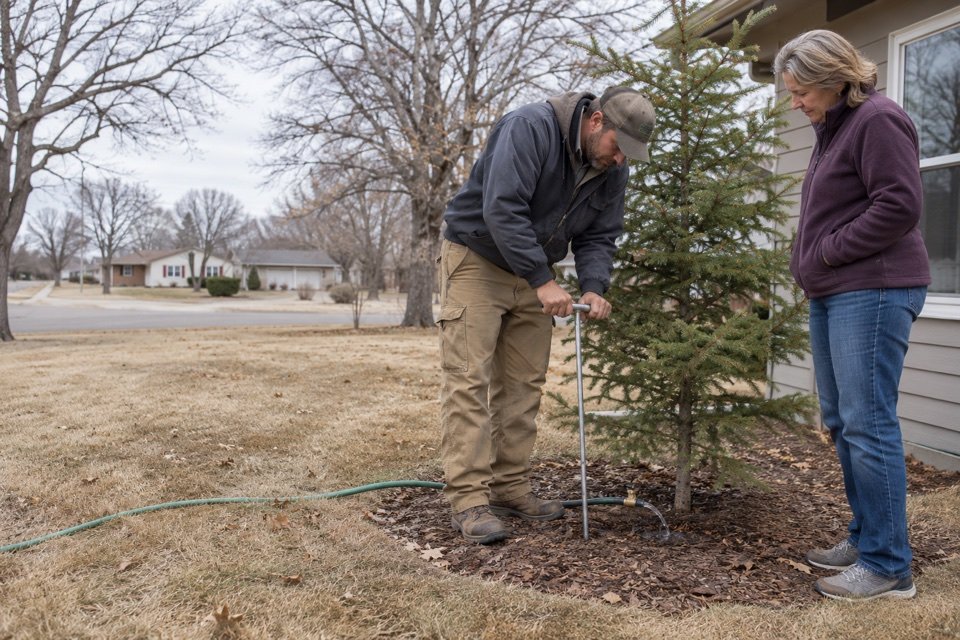
A long screwdriver, metal rod, wooden dowel or soil probe is a useful field check. It usually enters moist soil more easily and meets greater resistance in dry soil. The goal is not to force a tool through frozen ground or buried utilities. Use gentle pressure, check several representative spots and stop if conditions are unsafe or uncertain.
- Check recently planted areas first. Their roots occupy a smaller soil volume and have less access to stored moisture.
- Compare exposed and protected areas. South- and west-facing beds and windy corners often dry faster.
- Look beyond the trunk. Tree and shrub roots spread through the surrounding soil, so one wet spot beside the stem does not describe the full root zone.
- Notice drainage. Standing water, soft saturated soil or a sour smell means the issue may be excess water, not drought.
- Account for precipitation. Rain and melted snow count only when they actually soak into unfrozen soil.
Which plants deserve priority?
Recently planted trees and shrubs
Newer plants are the first priority because their root systems have not yet explored a large volume of soil. A tree planted this year may look dormant and stable while the original root ball and nearby backfill are drying faster than the surrounding yard. Check both the root ball area and the adjacent soil.
Apply water slowly across the active root area instead of pouring it against the trunk. Keep mulch in a broad, shallow layer and pull it back from direct trunk contact. A mulch volcano can hide moisture problems, encourage bark damage and make it harder to see the root flare.
Evergreens
Pines, spruces, junipers and arborvitae keep foliage through winter and continue losing some moisture on sunny, windy days. When roots cannot replace that water, foliage may brown or scorch. Damage may not become obvious until late winter or spring.
Prioritize recently planted evergreens and those exposed to prevailing wind, reflected heat or dry soil. Water during a suitable mild period before the soil freezes again, but do not keep the root zone continuously wet. Many conifers perform poorly in saturated soil.
New lawns and repaired areas
Newly seeded, overseeded or sodded turf has less-developed roots than an established lawn. It may need closer monitoring when autumn precipitation is limited. Established tall fescue and bluegrass can tolerate dormancy, but the soil supporting the crowns should not remain extremely dry for a prolonged winter period.
K-State guidance for established lawns recommends moist soil going into winter and notes that water may be needed during midwinter thaws when natural precipitation is insufficient. Treat any quantity or interval as a starting point—not a substitute for checking the actual soil and accounting for turf type, slope and weather.
Containers and raised beds
Containers and elevated planters lose moisture faster because more of the soil is exposed to air. Their roots also experience colder temperature swings. Hardy plants left outdoors still need drainage and occasional moisture checks, but water must be able to leave the container. A frozen, waterlogged pot can damage both roots and the container.
Choose a safe watering window
Wait for a mild period when the ground is unfrozen and water can infiltrate. Morning through early afternoon is usually more practical than evening because hoses, walkways and surface moisture have time to drain before temperatures fall. Avoid watering when a rapid freeze is expected or when strong wind will carry water away from the target.
Turn off automatic scheduling and make winter watering a condition-based decision. An irrigation controller cannot feel frozen soil, notice water crossing a sidewalk or determine that the shaded north side is already wet. Manual operation also makes it easier to observe broken heads, leaking valves and low spots.
- Review recent precipitation and the short-term temperature forecast.
- Confirm the soil is unfrozen and actually dry below the surface.
- Choose a mild, calm part of the day with time for drainage before night.
- Apply water slowly enough that it soaks in rather than running away.
- Recheck the soil at depth and stop before the area becomes saturated.
- Disconnect and drain hoses and exposed equipment after use.
How much water is enough?
A universal number is tempting, but it can be wrong for the property. Sandy soil accepts water quickly and dries faster. Clay soil may accept it slowly and remain wet longer. Compacted soil, slopes and buried construction debris can send water sideways before it reaches useful depth. Plant size and root distribution change the target area.
A better method is to water slowly, pause if runoff begins and verify how deeply moisture moved. K-State winter-landscape guidance emphasizes a thorough watering that reaches the root zone rather than several light surface sprinklings. For many landscape situations, checking for moisture roughly a foot into the soil provides a useful practical target, but shallow-rooted plantings and site-specific conditions may require a different approach.
For trees and shrubs, distribute water over the root area rather than concentrating it at one point. A slow hose, soaker hose or correctly operating low-volume system can work when monitored. Move the outlet as needed so one spot is not flooded. For turf, use straight-sided containers to see whether coverage is even and stop water that reaches pavement or drains beyond the lawn.
Avoid the three common winter-watering mistakes
1. Watering frozen ground
Water cannot infiltrate normally when the soil is frozen. It may run across the surface, collect in low areas and refreeze on walks or drives. Wait for a genuine thaw and check the ground—not just the air temperature.
2. Confusing poor drainage with drought
Yellowing, thinning or stressed plants are not proof that more water is needed. Saturated soil reduces oxygen around roots and can create similar symptoms. If the area stays wet long after nearby soil drains, investigate grade, compaction, irrigation leaks or a blocked outlet. Our guide to standing water and yard drainage explains how to trace the source before choosing a fix.
3. Creating ice around paths and entries
Overspray and runoff can turn a minor irrigation problem into a slip hazard. Keep water away from sidewalks, steps, driveways and shaded pavement. Repair tilted or damaged heads, use a lower flow rate and shut the system down early enough for exposed surfaces to dry. If pavement is already moving or holding water, review the freeze-thaw property checklist.
Winter watering is part of a larger property system
Watering works best when grading, drainage, irrigation and planting design support one another. A thirsty evergreen beside a downspout may have dry foliage but saturated roots. A lawn on a slope may receive plenty of water at the top and almost none in the middle because the application rate exceeds infiltration. A leaking valve may keep one bed wet while the rest of the property dries out.
Before adding equipment, map where the water comes from, where it soaks in and where it leaves. Correct broken irrigation parts, redirect damaging runoff and relieve avoidable compaction. Then group plants with similar water needs and apply water to the root zones that need it. This approach protects the landscape without treating the entire property as one uniform zone.
A practical winter watering checklist
- Track meaningful rain and snowmelt instead of assuming every storm reached the roots.
- Check soil moisture beneath mulch and turf every few weeks during prolonged dry weather.
- Prioritize newly planted trees, shrubs, evergreens and recently established turf.
- Water during a mild thaw when soil is unfrozen and no rapid freeze is expected.
- Apply water slowly across the root zone and pause when runoff begins.
- Keep water off pavement, foundations and areas that already drain poorly.
- Maintain a shallow mulch layer, but keep mulch away from trunks and stems.
- Drain hoses and exposed components after use.
- Document recurring dry and wet zones for spring irrigation or drainage corrections.
Frequently asked questions
Should I water my lawn during winter in Central Kansas?
Possibly. If precipitation has not kept the soil moist, established lawns may benefit from watering during a mild winter thaw. Check the soil first, water only when it is unfrozen and avoid creating runoff or ice.
Can I water trees and shrubs when it is cold outside?
Yes, when the soil is unfrozen and temperatures allow water to soak in safely. Apply water slowly across the active root area, not against the trunk, and finish early enough for paved surfaces and hoses to drain before temperatures fall.
Which landscape plants need winter water most?
Recently planted trees and shrubs, evergreens, newly established lawns and plants in exposed or fast-drying locations deserve priority. Their needs still depend on soil type, precipitation, drainage and rooting depth.
How can I tell whether the soil is dry below the surface?
Check beneath mulch or turf rather than judging the surface. A long screwdriver, metal rod or soil probe enters moist soil more easily than dry soil. Check several locations and stop if the ground is frozen.
Can too much winter watering hurt the landscape?
Yes. Saturated soil limits oxygen around roots and can add runoff, erosion, ice and freeze-thaw problems. Correct drainage or irrigation defects instead of repeatedly adding water to soil that is already wet.
Research used for this guide
This article follows Kansas-specific guidance from K-State Research and Extension, including Tree and Shrub Problems in Kansas, Watering Established Trees and Shrubs and Watering Established Lawns. Site conditions still vary; when plant health, drainage or irrigation behavior is unclear, evaluate the property before prescribing more water.
Not sure whether your landscape is dry—or draining poorly?
Send CPS photos and project details. We can help assess irrigation coverage, drainage patterns, soil conditions and the practical next step for your Central Kansas property.