
An icy front walk is an immediate safety problem. The fastest response can seem simple: pour on more ice melt. But the material that helps loosen ice can also be tracked indoors, carried into planting beds, concentrated beside pavement and left against concrete, pavers or metal long after the storm is over.
A better winter routine starts with mechanical removal. Shovel early, scrape the bonded layer, correct water that repeatedly crosses the path and reserve deicer for the remaining hazard. The objective is not a pavement surface covered in granules. It is a safe route with the least material needed for the actual conditions.
The short version: remove snow first, read the complete product label, confirm that the product is allowed on the surface, apply it evenly and sparingly, keep it out of lawns and beds, then sweep up visible excess when the pavement is dry.
Ice melt is one tool—not the complete winter plan
Deicers lower the freezing point of water and help break the bond between ice and pavement. They work differently depending on their ingredients, concentration, pavement temperature and the amount of moisture present. A product that performs in one weather event may be ineffective or inappropriate in another.
Deicer cannot replace drainage, timely shoveling or surface repair. A downspout that sends water across a walk can rebuild the same ice every night. A sunken paver can hold meltwater. A leaking irrigation line can create an unexplained frozen patch. Repeatedly salting the result may hide the pattern without correcting its cause.
Before treating the surface, ask where the water came from and where it will go when it melts. If the route directs salty runoff toward turf, a tree, a planting bed, a metal threshold or a storm drain, the application affects more than the spot underfoot.
Step one: remove as much snow as possible
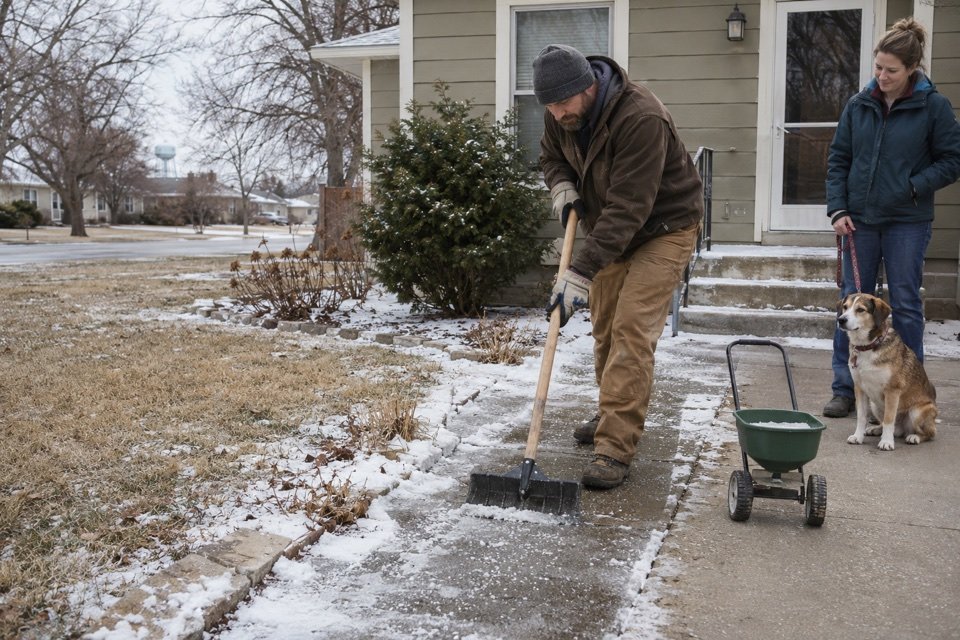
Fresh snow is usually easier to move than packed snow. Shovel or sweep early enough that foot traffic does not compress the entire layer into ice. Use a tool suited to the surface and avoid striking raised paver edges, fragile steps or decorative finishes.
After the loose snow is gone, scrape the remaining bonded layer. Deicer can then reach the ice-pavement interface rather than becoming diluted through a deep layer of snow that will later be pushed into the lawn. This reduces waste and limits the amount that travels with the snow pile.
- Mark the essential walking route, steps, ramps and entry landing.
- Shovel loose snow before it is compacted by traffic.
- Scrape the thin bonded layer without damaging the surface.
- Move snow to an area where meltwater will not cross the route again.
- Use deicer only where ice remains and the label allows it.
- Sweep up visible excess after the pavement is dry.
What the common deicer ingredients mean
Ice-melt products may contain sodium chloride, calcium chloride, magnesium chloride, potassium chloride, calcium magnesium acetate, urea or blends. The front label may emphasize a low working temperature, speed or a claim about surfaces or pets. Those claims do not make every formulation interchangeable.
Chloride-based products can move with meltwater and build up in nearby soil. Different formulations also have different temperature ranges, application rates and effects on surfaces and metal. A product marketed as gentler may still cause damage when it is overapplied, used outside its label conditions or allowed to collect in one location.
Read the ingredient statement, directions, temperature range, warnings and surface restrictions. Keep the original container so the label remains available. Do not combine products unless the manufacturer specifically directs it, and do not assume a larger dose will melt ice faster or farther.
How ice melt can affect concrete and masonry
Concrete absorbs some moisture. During freezing weather, water within pores and cracks expands as it freezes. Repeated wetting, freezing and thawing can contribute to scaling, spalling and enlargement of existing cracks. Deicer can increase the number of freeze-thaw cycles by creating meltwater that later refreezes.
Risk varies with the concrete mix, finishing, curing, age, drainage, air entrainment, existing damage and product used. New or weak concrete, exposed aggregate, mortar and decorative surfaces can be particularly sensitive. Follow the concrete contractor, surface manufacturer and deicer label instead of relying on one rule for every slab.
Watch for flaking, loose aggregate, powdering, dark wet patches, widening cracks and water collecting along joints. These signs do not automatically prove salt caused the problem, but they show that the surface and drainage deserve attention before repeated treatment continues.
Pavers, natural stone and joints need their own check
Interlocking pavers are a system: units, bedding, base, edge restraints and joint material work together. Meltwater can enter joints, carry fine material and refreeze. Loose or sunken units may collect more water and require repeated treatment. Some deicers can stain or alter natural stone and masonry.
Confirm the specific paver or stone manufacturer's maintenance guidance. Avoid leaving piles in joints or along edges. If one section repeatedly freezes, inspect slope, settlement and runoff. The deeper issue may be the same base or drainage problem discussed in our guide to sunken patios and walkways.
Salt moves into lawns and planting beds
Granules do not remain exactly where they are spread. They can be kicked into turf, pushed with snow, dissolved by meltwater or carried by vehicles. K-State Research and Extension notes that deicing salts can injure tree and shrub roots after washing into the root zone and can damage branches through direct contact.
Salt in soil makes it harder for roots to take up water. Sodium can also contribute to poor soil structure and reduced infiltration. Visible symptoms may appear later as browning needles, scorched leaf edges, branch dieback, thin turf or a sharp boundary between healthy grass and the pavement edge.
- Do not use the lawn or planting bed as the storage area for heavily salted snow.
- Keep the spread pattern on the critical pavement rather than broadcasting across edges.
- Do not leave torn bags or spilled piles where precipitation can dissolve them.
- Sweep dry excess before it can wash into soil or drainage routes.
- Document recurring spring damage beside walks and drives.
- Consider soil testing when salt injury is suspected rather than guessing from appearance alone.
Metal, doors and indoor floors can also be affected
Salty slush can corrode railings, fasteners, vehicle parts, door thresholds and other metal. Granules and grit can scratch finished floors when tracked indoors. Residue may collect on entry mats, pet paws and footwear, then spread through the building.
Use durable walk-off mats, remove wet residue promptly and clean according to the surface manufacturer's instructions. Do not wash a concentrated pile straight into the lawn or storm drain. Sweep up solids first, then manage the remaining residue without creating another icy patch.
“Pet friendly” still requires careful use
Pets can be exposed when material sticks to their paws or when they lick treated snow and slush. The ASPCA advises wiping or rinsing paws after treated walks, minimizing licking until paws are clean and storing ice-melt packages securely. Products marketed as pet friendly can still irritate paws or cause illness if swallowed.
Keep animals away while applying the product and until the treated route is ready for use. Consider a separate low-exposure path, paw protection recommended by a veterinarian and a towel near the door. If a pet may have swallowed ice melt or shows concerning symptoms, contact a veterinarian or animal poison-control professional promptly; do not improvise a home treatment.
Traction materials help differently
Sand and similar abrasives can improve grip, but they do not melt ice. They may be useful when a chemical deicer is inappropriate or temperatures are outside the product's effective range. However, too much grit can become a cleanup problem, enter drains, damage indoor finishes or create a loose surface after the ice melts.
Traction does not repair an unstable step, missing handrail, poor lighting or a sunken path. Combine surface treatment with a clear route, reliable lighting and secure rails. Our outdoor lighting guide explains how useful, low-glare light can make steps and transitions easier to see.
Find the reason ice keeps returning
A section that ices repeatedly is giving you information. Observe the property during a thaw and after rain. Look for a downspout discharge, roof drip line, negative grade, compacted snow pile, leaking hose bib, low paver edge or shaded depression. Mark the source before the next freeze hides it.
Recurring water beside steps, foundations or pavement can also contribute to settlement and freeze-thaw movement. Review the CPS freeze-thaw property checklist and the guide to standing water and drainage before treating the same symptom all winter.
A better ice-management routine
- Prepare: inspect shovels, scrapers, lighting, rails and entry mats before the storm.
- Remove: clear loose snow early and keep the essential route open.
- Diagnose: note where water and refreezing begin.
- Select: choose a product allowed for the surface and expected temperature.
- Apply: follow the label and treat only the remaining hazard.
- Protect: keep material out of lawns, beds, drains and pet-accessible storage.
- Recover: sweep dry excess, clean entries and record damaged areas for spring repair.
Frequently asked questions
Should I apply ice melt before or after shoveling?
Remove loose snow first. A thin deicer application can then reach the bonded ice instead of being wasted in snow that will be shoveled away. Follow the product label and surface instructions.
Can ice melt damage concrete or pavers?
Deicers can contribute to scaling, surface deterioration, staining or joint problems, especially when the material is new, damaged, porous or repeatedly exposed to moisture and freeze-thaw cycles. Confirm the surface manufacturer's restrictions before application.
Is pet-safe ice melt completely harmless?
No label should replace careful use. Products marketed as pet friendly may still irritate paws or cause illness if ingested. Use only what is needed, store it securely and wipe or rinse paws after treated walks.
Does sand melt ice?
No. Sand can improve traction, but it does not melt ice. Use it carefully because excess material can be tracked indoors or collect in drains and low areas.
What should I do with ice melt left on dry pavement?
Sweep up visible excess after the hazard has passed and store reusable material in a labeled container. This reduces tracking, corrosion and movement into lawns, planting beds and drainage systems.
Research used for this guide
This article follows guidance from K-State Research and Extension on salt injury to Kansas trees and shrubs, the University of Minnesota Extension on deicing salts and landscapes, and the ASPCA Animal Poison Control Center on ice-melt exposure. Always follow the current label and the instructions for the exact surface and product in use.
Does the same walkway freeze after every storm?
Send CPS photos and project details. We can help assess drainage, settlement, lighting, surface condition and the practical next step for a safer Central Kansas property.